I've long thought shapeshifters to be a relatively weak character build, especially those keyed to animals. When you're taking the shape of other humans, or mimicking powers, your possibilites are unlimited, but I've rarely seen an animal shapeshifter be more than a gorilla or an eagle, or maybe a mouse. But perhaps I've not been fair.
Many animals have enhanced strength relative to size (Ants/Dung Beetles) or great leaping ability (Fleas), or Flight, or the ability to climb, or breathe water. Many animals (Cuddlefish) can camouflage also. Then there are shelled animals which could provide protections. Then there's plenty of poisonous or venomous animals (poison = ingested when you eat the animal, venom = delivered by stinger or bite).
Of course, eagles have superior vision, and being very large or small can carry some strength or dex bonuses.
Below are actual superpowers (innate!) possessed by animals:
Bombardier Beetle: The ability to shoot boiling gas at enemies:
Hyenas: Can digest diseased and rotting food with no ill effects. (Iron Stomach).
Horned Lizard: Can shoot blood from its eyes.
Platypus: Has a venomous stinger (if male) and can "see" electrical currents (precise: can tell the difference between an animate and inanimate object). Their venom is resistant to morphine.
Chitons: Their iron-like teeth can act as a compass giving them absolute direction.
Bats: Using sonar to "see" sound, and of course, flight.
Hairy Frogs: Break their bones and push them out their skin to make claws (like wolverine).
Mantis Shrimp: Can see the entire light spectrum, including infrared and ultraviolet. They can also punch with the same acceleration as a bullet.
Pistol Shrimp: Can create a 218 decibel blast (enough to kill small fish), and the cavitation bubble gets to be 4700 degrees celcius.
Narwhals: Have a unicorn horn, perfect for goring. Also rams, rhinos, etc.
Dragon Millipedes: Can shoot cyanide.
Sea Cucumbers: Can liquify themselves (insubstantial 2)
Geckos: Can walk on walls and ceilings.
Skunks: That awful stench spray.
Eels: Poisonous blood.
Spiders: Web-spinning.
Starfish and Salamanders: Regeneration
Fireflies: They create light via bioluminescence.
Lyrebirds: Can perfectly mimic any sound, even human sounds (speech, crying babies, chainsaws)
Electric Eels: Can produce electricity and shocks similar to a stun gun.
Turriptosis Jellyfish: Can make themselves young again, restarting their life cycle.
Tardigrades: Can survive in space, vaccums, extreme temperatures, the bottom of the deepest part of the sea, be dehydrated for 10 years, not eat for 30 years, withstand radiation 1000x more powerful than that which would kill other animals- they are practically indestructable.
Now granted, many of these animals are not suitable for combat- a tardigrade is half a milimeter long, and many of these are tiny aquatic animals- but if you can change their size, or adapt their powers into some kind of amalgam form, you can do very well as an animal based shapeshifter!
Friday, April 22, 2016

Friday, April 15, 2016
Saying "Yes" to your Players, Changing the Campaign
Mutants and Masterminds is a broken system. There's no doubt about it. With ultimate mimics, time travellers, and PCs who can blast you through ESP from another planet, there can easily be characters that no villain can hope to defeat.
Then you have your background stuff- the easily affordable army of ninja spies the PCs have working as an unofficial police force in the city, or the fleet of star destroyers they bought that are waiting (in secret) in case the PCs need to go conquer an alien solar system (you never know). Or the sidekick whose sole purpose is to further optimize an existing PC.
You spend a lot of time saying "no" to your player. But the real challenge is in saying "yes" to your players.
Certainly there are times when no is appropriate, mostly because 1 PC is taking away the fun from another PC. For example, when 1 PC has taken power sets that make you wonder why he doesn't just solo every mission.
At those times, "No" may be the appropriate response to a hero build. But what if EVERYONE is the super powered character? How do you maintain a fun campaign with all this going on?
This was also toyed with in Megamind where the villain won, and was so bored he needed to create a new hero to fight, which quickly got out of hand as well.
The Glory Days are Over

Instead of having the heroes go villain, why not time skip- 10-20 years! The heroes are now old, having kept the world well in hand, and their secret identities have become their only identities. Maybe this was government forced like in the incredibles, or maybe not. Now new threats have developed after all this time, and the PCs must get the band back together to fight a new threat, perhaps while they are now embedded in a new lifestyle that doesn't lend itself to dropping everything to fight again. (Perhaps they now have some kind of aging penalty to their stats).
Training the next Generation:
Instead of helping your sidekick move on, maybe you need to take a ragtag bunch of misfits and help them learn to be heroes- without getting involved yourself! Sure, if things get out of hand, you and your old PC buddies can come in and lay down the thunder, but eventually you want to retire as heroes, and you need new people to take up the mantle. Have the PCs make sidekicks or lower PL characters to train, and try to engage the action into these new characters. Eventually the PCs will move over to controlling the new characters as the old step into the background, but in the meantime, the higher PL characters can dominate in case of emergency.
Any other ideas on what to do when the PCs get to strong?
Then you have your background stuff- the easily affordable army of ninja spies the PCs have working as an unofficial police force in the city, or the fleet of star destroyers they bought that are waiting (in secret) in case the PCs need to go conquer an alien solar system (you never know). Or the sidekick whose sole purpose is to further optimize an existing PC.
You spend a lot of time saying "no" to your player. But the real challenge is in saying "yes" to your players.
Certainly there are times when no is appropriate, mostly because 1 PC is taking away the fun from another PC. For example, when 1 PC has taken power sets that make you wonder why he doesn't just solo every mission.
 |
| From Left to Right: Badass, Badass, Omnipotent, Genius, Badass, Badass |
Bigger and Badder: The simplest and most direct route is to raise the power of the enemies. Bigger and bigger super-villains with grander and more complicated plans continue to rise, but there's a limit to that. Sometimes the PCs are strong enough to disintegrate a planet, but in the meantime, a bigger villain can be the answer.
Ethical Choice: Sometimes the issue isn't whether you CAN break it, but if you SHOULD. What if the PCs are put in the middle of a dispute and both sides have a point? What side do they take, what's the result of their choice? The PCs power level is irrelevant if it comes down to making the right (or the best) ethical choices.
Change of Venue: So your heroes have a powerful ninja army patrolling the streets of New York and stopping all the crime? Maybe we need to spend some time in a foreign country helping to rescue a political hostage? Maybe the heroes need to travel to the future/past/or an alternate dimension where the army of ninja's don't exist. The army of minions, star destroyers, or whatever are still relevant in protecting the earth, and they are making it POSSIBLE for the heroes to leave without all hell breaking loose.
Promoting the Stakes: Not just "raising the stakes" but promoting them. We're not talking about going from a "threat to the city" to a "threat to the world"- but recognizing the players for the godlike characters they've become. The mafia is no longer a threat to the characters, but now they are being approached for assistance by major power groups themselves- perhaps the Gods themselves are seeking aid on an internal power struggle, or an elite group of mages needs assistance in maintaining a seal on a dark demon. The PCs go from being a big fish in a small pond to a much bigger pond, as a "reward" for their super powerful characters.
Maintaining an Empire: PCs with lots of property or minions may benefit from a mission based on maintaining said empire. Maybe it's a subversive element within their own ranks, or a time traveler seeking to erase their empire, or maybe its out and out war with another powerful group. There is a lot of red tape involved with having a huge business venture or army of minions, and that should come up (sometimes) if the PCs have them.
Promoting the Sidekick: Powerful sidekicks may eventually want to go off and do their own thing: they don't want to remain in the shadow of the hero forever. A mission might involve the sidekick wanting to start his own hero team, or join another one- one without the main character who will consistently view them as a subordinate. This can be a feather in the cap of the PC who trained them until they were ready to head out on their own, and can be a source of future missions as the other group runs into trouble, becomes trouble, or can be called upon to get the main group out of trouble!
 |
| They can't stay young forever! |
Earth 2: There's always some mission out there where the heroes have to fight villainous versions of themselves. Whether its an outright mirror of opposition or the heroes just fight clones of themselves, or if they're legitimate dopplegangers from another dimension, or if it's a mimic/shapeshifter pretending to be the PC to ursurp their empire (or attack them with their own broken power sets). The more powerful a PC is, the harder it would be for him to defeat himself. Even moreso if it's a temporary complication such as mind control where the REST of the party has to defeat him.
Time for a Journey: This is similar to the Change of Venue, but it's more long-term. The Earth is saved, and its well in hand. All the super villains are defeated, there are no more missions here. Now the campaign model needs to change to fit the powerful PCs. Similar also to promoting the stakes, but the powerful PC must journey for an ever increasing challenge, or simply retire.
But not all hereos want to retire- some need new challenges. Perhaps they go into space to find more enemies to fight, or they challenge the gods themselves. If this is one PC, it's a way to replace them with a more suitably built PC. When it's the whole party, you simply change. Now the earth is fine, so they're on a star trek campaign visiting new worlds, or they're sliding to different dimensions where they can do more good. In any case, they may never return to the earth as they know it, but they're doing good elsewhere. Whether the campaign follows them on their new adventures, or stays behind to focus on new heroes is up to you.
Time for a Journey: This is similar to the Change of Venue, but it's more long-term. The Earth is saved, and its well in hand. All the super villains are defeated, there are no more missions here. Now the campaign model needs to change to fit the powerful PCs. Similar also to promoting the stakes, but the powerful PC must journey for an ever increasing challenge, or simply retire.
 |
| When saving the world was too easy- Metro Man retired and became Music Man |
Turning Villain
Well, you've done it. You've put yourself out of a job. Great job hero. You were too "amazing" for any villains to keep up with. Savor your victory- savor your endoresement contracts- but then it gets boring. Allow the PCs some time to fight rediculusly easy encounters. Then maybe tempt them with the idea that if there are no more supervillains, they need to help create them. Perhaps the campaign shifts to something more evil.
 |
| Captain Amazing had to help villains escape so he could stay in the limelight |
This was also toyed with in Megamind where the villain won, and was so bored he needed to create a new hero to fight, which quickly got out of hand as well.
The Glory Days are Over

Instead of having the heroes go villain, why not time skip- 10-20 years! The heroes are now old, having kept the world well in hand, and their secret identities have become their only identities. Maybe this was government forced like in the incredibles, or maybe not. Now new threats have developed after all this time, and the PCs must get the band back together to fight a new threat, perhaps while they are now embedded in a new lifestyle that doesn't lend itself to dropping everything to fight again. (Perhaps they now have some kind of aging penalty to their stats).
Training the next Generation:
Instead of helping your sidekick move on, maybe you need to take a ragtag bunch of misfits and help them learn to be heroes- without getting involved yourself! Sure, if things get out of hand, you and your old PC buddies can come in and lay down the thunder, but eventually you want to retire as heroes, and you need new people to take up the mantle. Have the PCs make sidekicks or lower PL characters to train, and try to engage the action into these new characters. Eventually the PCs will move over to controlling the new characters as the old step into the background, but in the meantime, the higher PL characters can dominate in case of emergency.
Any other ideas on what to do when the PCs get to strong?
Optional Rule: Situational Special Attacks
Video Games and Movies have usually had heroes come back from great wounds during a drawn out fight to find inner strength to go on. Some of the following optional rules can be invoked by the player by some reason (such as using hero points) or they might be invoked by a villain using a villain ball (such as pushing the hero's berserk button). See below for specific actions and how to invoke them.
No Player may invoke any of these options more than once per session, and it should really happen during a climactic battle.
Berserk Button (Overdrive Mode):
This can be invoked by a player when he's interacting with a villain who has the villain ball. (See optional villain ball rules).
The player uses a hero point to invoke Berserk Button, at which point, the villain says something extremely insulting, or threatens the hero's loved ones. Now the hero is pissed off.
The hero can make an immediate recovery check against all wound conditions. He also benefits from the RAGE feat (or if he has the rage feat, double benefit) which may exceed power level limits. He is however, completely berserk and must use his most powerful attacks against the villain at full power, and attempt to kill the villain. This rage lasts until the villain is defeated or escapes, at which point the hero collapses from fatigue. If there are other minions or villains involved in the combat, the hero cannot be awakened until combat is finished. If the villain hides or escapes and returns, the hero is still unconscious and cannot berserk again.
Desperation Attack
This is a hero's last chance maneuver against a powerful enemy. When the hero is damaged (injured or staggered) he may declare a desperation attack. He makes a single melee or ranged attack. He adds +1 to the power level for every 2 injuries he is currently suffering from. He may not take extra fatigue for this attack, so if he uses extra effort he must use a hero point. This is a full round action, so if he is staggered he MUST use a hero point to accomplish this, or take 2 rounds to do it. After the attack is complete, whether it hits or misses, or whether or not it damages the enemy, the player becomes exhausted and unconscious from fatigue.
Limit Break (-2 / level power flaw)
This is very similar to a Desperation attack, except that the hero has a special power that he can unleash in very special circumstances. The hero buys a power in advance, and adds the "Limit Break" limited. (-2 per level). This power can only be activated while the hero is staggered. He must purchase the power at his full power level, but the actual power level of the power is based on the current number of injuries he currently is suffering from. (Which can be above the campaign PL). Once the limit break is used, the character collapses from fatigue (even if immune- as if extra effort). He may be awakened normally (curing the fatigue or use of heal skill, etc).
Blaze of Glory
This is it. The bad guy is too powerful, they have the characters on the ropes or dying. One character suddenly lights with new passion, his flame burns brightly just before it burns out. This is a hero going out in a Blaze of Glory.
The hero on his turn can declare that he will go out in a blaze of glory. He becomes immune completely to fatigue/exhaustion for the rest of the encounter, and thus may use extra effort as much as he wants (though no more than once per roll). That means he may take an additional action each round, or give +2 to his power level or rolls, etc. Every roll he makes for the encounter, he may re-roll as if he used a hero point. (Attack rolls, saving throws, etc). He becomes immune to the stunned condition for the rest of the encounter. (He may still be staggered).
At the end of the encounter, however, his life burns out, and he has no more strength. The hero dies, either being drained away (like Tellah from FF4) or in a grand explosion of some kind.
In order to activate a Blaze of Glory, the character must be conscious, (though wounds, fear, exhaustion etc are not a factor), and 50% or more of his team must be completely incapacitated (dead, helpless, turned to stone, etc). He may be incapacited (pinned, snared, etc) and in entering the blaze he escapes any effect which currently incapacitates him. He fights the remainder of the battle alone. Any other PC is stunned (as if fascinated by the display) until the blaze ends. (Though they may continue to make saves against existing effects or have passive effects like regeneration continue).
Now one of two things can happen- if the player defeats the enemies, he dies and cannot be resurrected by any means. If the enemies defeat him, however, he still is permanently dead, but the enemies are empowered by their victory- the other PCs lose all their available hero points, and the enemies gain them- to be used as they wish.
Obviously, this results in PC death and character turnover, but if the alternative is a TPK, this is a very lore friendly superhero way to turn the tides, while still maintaining consequence for failure.
No Player may invoke any of these options more than once per session, and it should really happen during a climactic battle.
Berserk Button (Overdrive Mode):
This can be invoked by a player when he's interacting with a villain who has the villain ball. (See optional villain ball rules).
The player uses a hero point to invoke Berserk Button, at which point, the villain says something extremely insulting, or threatens the hero's loved ones. Now the hero is pissed off.
 |
| Spiderman is Pissed Off |
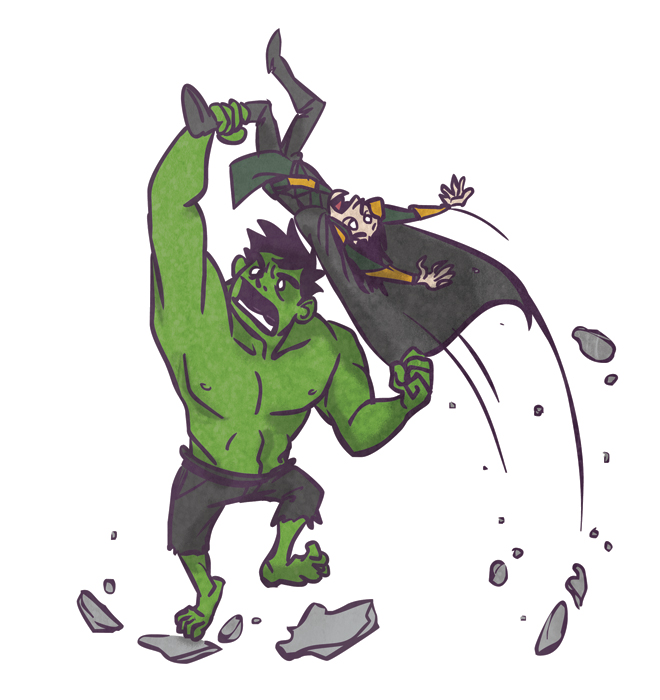 |
| Insulting a Hero is a Bad Idea |
Desperation Attack
This is a hero's last chance maneuver against a powerful enemy. When the hero is damaged (injured or staggered) he may declare a desperation attack. He makes a single melee or ranged attack. He adds +1 to the power level for every 2 injuries he is currently suffering from. He may not take extra fatigue for this attack, so if he uses extra effort he must use a hero point. This is a full round action, so if he is staggered he MUST use a hero point to accomplish this, or take 2 rounds to do it. After the attack is complete, whether it hits or misses, or whether or not it damages the enemy, the player becomes exhausted and unconscious from fatigue.
Limit Break (-2 / level power flaw)
This is very similar to a Desperation attack, except that the hero has a special power that he can unleash in very special circumstances. The hero buys a power in advance, and adds the "Limit Break" limited. (-2 per level). This power can only be activated while the hero is staggered. He must purchase the power at his full power level, but the actual power level of the power is based on the current number of injuries he currently is suffering from. (Which can be above the campaign PL). Once the limit break is used, the character collapses from fatigue (even if immune- as if extra effort). He may be awakened normally (curing the fatigue or use of heal skill, etc).
Blaze of Glory
This is it. The bad guy is too powerful, they have the characters on the ropes or dying. One character suddenly lights with new passion, his flame burns brightly just before it burns out. This is a hero going out in a Blaze of Glory.
The hero on his turn can declare that he will go out in a blaze of glory. He becomes immune completely to fatigue/exhaustion for the rest of the encounter, and thus may use extra effort as much as he wants (though no more than once per roll). That means he may take an additional action each round, or give +2 to his power level or rolls, etc. Every roll he makes for the encounter, he may re-roll as if he used a hero point. (Attack rolls, saving throws, etc). He becomes immune to the stunned condition for the rest of the encounter. (He may still be staggered).
At the end of the encounter, however, his life burns out, and he has no more strength. The hero dies, either being drained away (like Tellah from FF4) or in a grand explosion of some kind.
In order to activate a Blaze of Glory, the character must be conscious, (though wounds, fear, exhaustion etc are not a factor), and 50% or more of his team must be completely incapacitated (dead, helpless, turned to stone, etc). He may be incapacited (pinned, snared, etc) and in entering the blaze he escapes any effect which currently incapacitates him. He fights the remainder of the battle alone. Any other PC is stunned (as if fascinated by the display) until the blaze ends. (Though they may continue to make saves against existing effects or have passive effects like regeneration continue).
Now one of two things can happen- if the player defeats the enemies, he dies and cannot be resurrected by any means. If the enemies defeat him, however, he still is permanently dead, but the enemies are empowered by their victory- the other PCs lose all their available hero points, and the enemies gain them- to be used as they wish.
Obviously, this results in PC death and character turnover, but if the alternative is a TPK, this is a very lore friendly superhero way to turn the tides, while still maintaining consequence for failure.
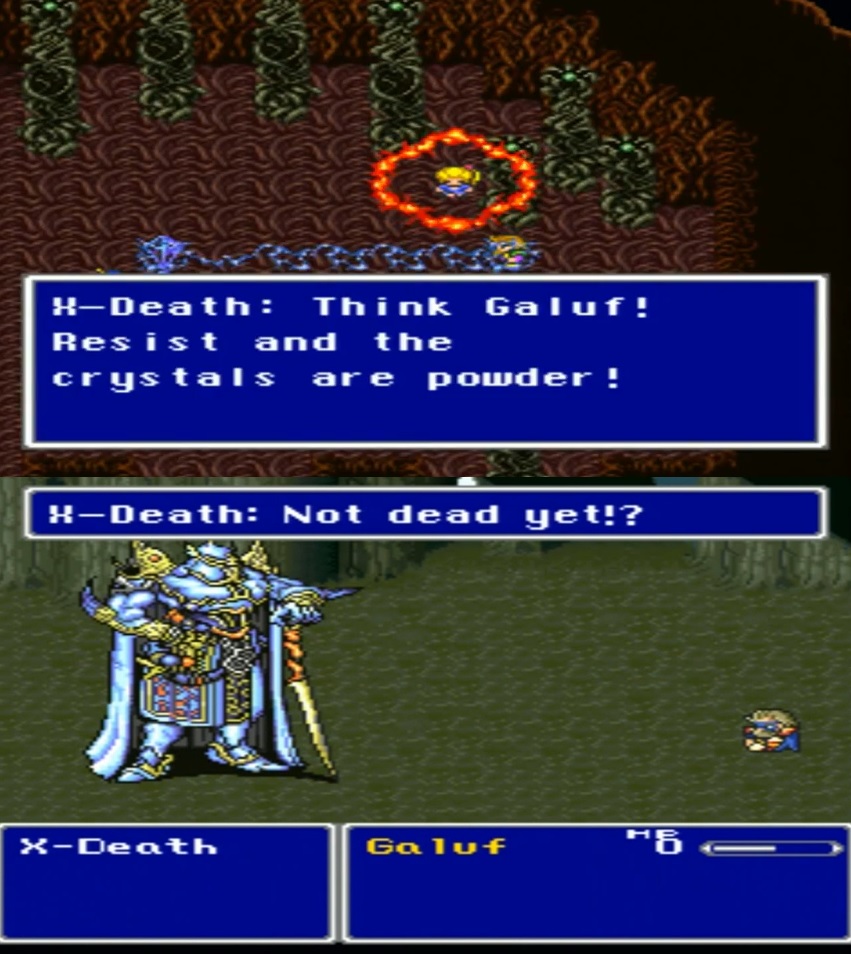 |
| Galuf goes out in a Blaze of Glory |
Monday, April 11, 2016
Campaign Styles
We all know about the Silver Age of Comics and such presented by the books, but here I thought I'd list some alternate campaign styles I've seen run using the Mutants and Masterminds "Engine".
High Fantasy: All powers are based on magic spells as a wizard, or a fighter technique, etc, and the characters are in a high fantasy world instead of a more tech one. Of course, most of the tech feats are removed or useless (unless time travel is used).
Gods: The PCs play gods and their powers are divine in nature. Of course, they must deal with other gods and the collection of followers as mission types.
Kids: The PCs are all kindergartners or teenagers at a school for super powered individuals- the stakes are usually lower (no saving the world) but the youthful age and school dynamic adds an interesting twist.
Powered World: Everyone in the world has some powers, so the heroes are not unique in that respect, and rather than superheroes or masked vigilantes, they are bounty hunters or do some kind of "for hire" work that drives their adventures.
Trekking: The PCs are all gadgeteers exploring space, where they frequently meet super powered aliens. Without special powers themselves (except what they build), and perhaps driven by some kind of prime directive.
The Dark World: The PCs all get their powers from an encroaching realm of magic, and much of the campaign involves them travelling there to defeat supernatural threats that are otherwise bleeding into the main world.
Book-Hopping: The superheroes have been cast into a sliders style campaign, except rather than alternate earths per se, they are exploring the worlds of alternate pen and paper game systems- they take a tour of shadowrun, then call of cthulhu, then go to D&D or Ravenloft, all trying to get back home.
What alternate play styles besides simply "Super Heroes" have you seen?
High Fantasy: All powers are based on magic spells as a wizard, or a fighter technique, etc, and the characters are in a high fantasy world instead of a more tech one. Of course, most of the tech feats are removed or useless (unless time travel is used).
Gods: The PCs play gods and their powers are divine in nature. Of course, they must deal with other gods and the collection of followers as mission types.
Kids: The PCs are all kindergartners or teenagers at a school for super powered individuals- the stakes are usually lower (no saving the world) but the youthful age and school dynamic adds an interesting twist.
Powered World: Everyone in the world has some powers, so the heroes are not unique in that respect, and rather than superheroes or masked vigilantes, they are bounty hunters or do some kind of "for hire" work that drives their adventures.
Trekking: The PCs are all gadgeteers exploring space, where they frequently meet super powered aliens. Without special powers themselves (except what they build), and perhaps driven by some kind of prime directive.
The Dark World: The PCs all get their powers from an encroaching realm of magic, and much of the campaign involves them travelling there to defeat supernatural threats that are otherwise bleeding into the main world.
Book-Hopping: The superheroes have been cast into a sliders style campaign, except rather than alternate earths per se, they are exploring the worlds of alternate pen and paper game systems- they take a tour of shadowrun, then call of cthulhu, then go to D&D or Ravenloft, all trying to get back home.
What alternate play styles besides simply "Super Heroes" have you seen?
Thursday, March 31, 2016
Extra: Charged Power and Blood Magic
The system includes a flaw "Action" which allows the player to get a discount on his power by moving it from a stadard action to a full round action, and further to 1 full round. From there you can have the complication if the power takes even longer to cast.
This is ideal for powers like boost that you could make cheap by giving a crazy time to charge up, then be able to go use it as needed, instead of a power you need to make use of in combat.
However, I think there's room for one more kind of power- a charged power.
Extra: Charged Power (+0)
A charged power has its power level modified by how quick an action it is. Consult the chart below. Whatever power level you buy the power at is the "base" power level. This power cannot be further modified in either direction by the action edge/flaws.
Free Action (once per round): Power can activate at PL 1.
Move Action: Power Can activate at 1/4 PL (round down, min 1).
Standard Action: Power can activate at 1/2 PL (round down, min 1).
Full Round Action: Power can activate at base PL.
1 Full Round: Power can be activated at PL +1 (can break PL limits).
For each step on time/progression table, power can be activated at a further PL +1. (Maximum PL x 2 or PL 20)
During the "charge" time, the character is using all his actions to charge the power. He cannot move, and he is flat footed (but not helpless). He can be moved (such as being in a car, or carried on a horse or by others), but any vigorous movement requires a Concentration Check DC 15+PL or the charge is wasted and the power is lost.
If he is damaged, he must make a concentration check DC PL of power used + Toughness save of damage dealt or he loses the power and charge is wasted.
This can allow you to do Dragonball esque battles with long charge times and massive effects.
Notes:
This is ideal for powers like boost that you could make cheap by giving a crazy time to charge up, then be able to go use it as needed, instead of a power you need to make use of in combat.
However, I think there's room for one more kind of power- a charged power.
Extra: Charged Power (+0)
A charged power has its power level modified by how quick an action it is. Consult the chart below. Whatever power level you buy the power at is the "base" power level. This power cannot be further modified in either direction by the action edge/flaws.
Free Action (once per round): Power can activate at PL 1.
Move Action: Power Can activate at 1/4 PL (round down, min 1).
Standard Action: Power can activate at 1/2 PL (round down, min 1).
Full Round Action: Power can activate at base PL.
1 Full Round: Power can be activated at PL +1 (can break PL limits).
For each step on time/progression table, power can be activated at a further PL +1. (Maximum PL x 2 or PL 20)
During the "charge" time, the character is using all his actions to charge the power. He cannot move, and he is flat footed (but not helpless). He can be moved (such as being in a car, or carried on a horse or by others), but any vigorous movement requires a Concentration Check DC 15+PL or the charge is wasted and the power is lost.
If he is damaged, he must make a concentration check DC PL of power used + Toughness save of damage dealt or he loses the power and charge is wasted.
This can allow you to do Dragonball esque battles with long charge times and massive effects.
Notes:
- If you buy "Full Power" complication on this, you must charge up to maximum power in order to use the power at all.
- Feedback is a good flaw to use, with the idea that you are damaged or stunned or otherwise hurt if you lose the power prior to the charge being completed.
- You may want to limit this to combat powers (blast, nullify, snare, etc) rather than allowing characters to charge a long time for high level and high duration powers like boost or transform self, etc. It gets broken if a PL 10 character can charge in his house all day to gain benefits of a PL 20 transform or boost and run around with high level powers all day.
Extra: Blood Magic (+0)
Blood Magic is a power that drains the caster of their essence as they use it. Basically this power has the constant side effect that the user must make a toughness save against the damage TN of the power when it is used, or they are damaged. The damage given is incurable, and can only be healed through natural healing, not through the healing power or regeneration. The power must be purchased at the maximum power level. If you die from this, you completely disintegrate and cannot be resurrected (though you might be saved by time travel or something)
However, the advantage is that you may set any power level when you cast the power. Of course, higher power levels mean you will likely be irreversibly destroyed. The plus side is the ability to demolish power level limits and defeat more powerful foes.
Notes:
- You will certainly want to limit this to PC main characters, as this gets out of hand if they are used by summons, duplicates, minions, or other highly disposable characters.
- This should be viewed with distrust or as if it is evil, and public display will likely create penalties for public support rolls (or just outright villainy points).
- This makes for a great way for a hero to self sacrifice himself to beat a powerful villain, but keep in mind that this could have a huge party turnover of people willing to throw away a character to avoid a plot. This gets very powerful very quick. You've been warned.
Wednesday, March 30, 2016
Optional Rules: Public Support and Villany
Below are two optional rules you might want to include in your mutants campaign.
Public Support: This represents how much the average population views you as their hero, or as a troublesome vigilante. These can be separate per character, or the entire superhero team's result. You have a public support modifier, which starts at 0.
At the end of every public villain fight, roll 1d20, and apply the following modifiers:
So, during a battle with the evil Hansel Oliphant, master of mind control, and presidential candidate, the heroes are mind controlled and cause property damage (-2). They are able to overcome him (+2), but he escapes. However, he has a public support of 5 and the heroes have public support of 1 (-4). So the heroes roll 1d20 -2 (-2, +2, -4).
They consult the following table:
Result is less than Zero: Hero loses 1 point of public support. If they are already at zero, they gain 1 point of villainy.
Result is 0-20: No change to public support.
Result is 21+: Hero loses 1 point of villainy. If they have zero, the gain 1 point of public support.
Value of Public Support:
Public support represents how much the public values the hero's efforts. The player may roll a public support check (1d20+ support value) to get one of the following benefits:
DC 15: There is a parade or event in the hero's honor, perhaps the mayor gives him the key to the city or something.
DC 20: The hero gets a free rank of the "benefit" feat, as appropriate. Using this will reduce public support value by 2 points.
DC 20: The heroes can call for "crowd support" during a combat, where civilians will rush to the hero's aid in some fashion (determined by the GM) during a public fight. (See below for the obvious example from spiderman). Using this reduces public support by 2 points, but provides an additional +2 bonus to the public support gaining roll)
DC 30: The hero gets a museum or something similar built in his honor. Using this reduces public support by 5.
DC 30: The hero can call in a favor from an important political figure on a city level (such as a mayor or chief of police). This reduces your public support roll by 1.
DC 40: The hero can call in a favor from an important political figure on a state level, (such as the governor, or a city official from another city in the state). This reduces public support by 2.
DC 50: The hero can call in a favor from an important political figure on a national level (such as the president, or a city/state official from anywhere in the country). This reduces public support by 5.
DC 60: The hero can call in a favor from an important political figure on a global level (such as a leader of another country, or the united nations). This reduces public support by 10.
DC 70: The hero can call in a favor from an important political figure anywhere he is aware of, including another dimension, another planet, etc. This reduces public support by 20.
Villainy:
This is the opposite of public support in concept, but different in execution. This is when a player does something villainous, even for a good purpose. Perhaps he tortures a villain for information, or murders villains instead of jailing them. Perhaps he just does villainous things in general. Doing this gives out villain points. Note: The villainy does not need to be public knowledge. The hero's regularly stop villains who are being secretive about their evil plots. Likewise, the PCs secret evils might be discovered via esp, mind reading, postcognition, etc.
Villain Points:
Character Does minor villainy (such as stealing items harmlessly, making a deal with a bad guy to make a mission easier, letting a false villain take a fall, attacking police) +1 point.
Moderate Villainy (killing an enemy, torturing someone for a good purpose, gross negligence, hurts people) +2 points
Major Villainy (rape, killing innocents, rampant destruction) +4 points
Epic Villainy (genocide, disintegration of a planet, etc) +10 points.
Every session, roll 1d20 and add the villain points. (only roll if villain points > 0)
Result:
15-20:Police show up to attempt to apprehend the PC.
20-25: Another superhero attempts to apprehend the PC.
25-29: A superhero team attempts to apprehend the PC.
30+ The PC is deemed a public enemy and is wanted by governments as well as superheroes.
Alternately, the hero may lose villain points by doing especially altruistic acts, or sell them for "GM Hero Points" where the GM can have the villains use hero points at no benefit to the PCs except using up one of their villain points.
The idea here is for the PCs to act like heroes, and if they act more like antiheroes or villains instead, sooner or later someone comes after them.
What do people think? Would you use this in your campaign?
Public Support: This represents how much the average population views you as their hero, or as a troublesome vigilante. These can be separate per character, or the entire superhero team's result. You have a public support modifier, which starts at 0.
At the end of every public villain fight, roll 1d20, and apply the following modifiers:
- Heroes defeated Villain in a public fight (+2)
- During fight, villain was threatening civilian lives (+2)
- Normal law enforcement was powerless to defeat villain (+2)
- Innocent people were injured (-1) or killed (-5) or killed via friendly fire/carlessness of heroes (-10)
- Gross Property damage was incurred (-2)
- Heroes were supported or backed by an important public figure (chief of police, mayor, president) +2
- Hero allowed villain to escape in order to save civilians (+2)
- Hero captured the villain (+2), Hero killed the villain (-2), Hero killed the villain AFTER incapacitating him (-5), Villain killed by his own doing (purposefully or accidnetially) (+0)
- If captured, villain receives a full trial and goes to lawful imprisonment (+1)
- If a villain gets a trial, he is found not guilty (+0), or he is not able to be convicted due to an error made by the heroes (-2)
- Hero made use of especially terrifying powers (as determined by GM, but summoning demons, transforming into a monster, etc) (-2)
- Hero acted unethically in the combat to defeat the villain (-2) (Does not involve tricking the villain, but being generally unethical)
- Hero's actions caused damage to property or injury to public (-5), this goes to (-2) if this happened due to mind control or if it's proven to not be the hero's fault.
- Hero prevents villain's obvious scheme (stealing an object for example) (+1)
- Hero is defeated by the villain (-2)
- Villain has more public support than the heroes (subtract the difference)
- Hero has more public support than the villain (add the difference)
So, during a battle with the evil Hansel Oliphant, master of mind control, and presidential candidate, the heroes are mind controlled and cause property damage (-2). They are able to overcome him (+2), but he escapes. However, he has a public support of 5 and the heroes have public support of 1 (-4). So the heroes roll 1d20 -2 (-2, +2, -4).
They consult the following table:
Result is less than Zero: Hero loses 1 point of public support. If they are already at zero, they gain 1 point of villainy.
Result is 0-20: No change to public support.
Result is 21+: Hero loses 1 point of villainy. If they have zero, the gain 1 point of public support.
Value of Public Support:
Public support represents how much the public values the hero's efforts. The player may roll a public support check (1d20+ support value) to get one of the following benefits:
DC 15: There is a parade or event in the hero's honor, perhaps the mayor gives him the key to the city or something.
DC 20: The hero gets a free rank of the "benefit" feat, as appropriate. Using this will reduce public support value by 2 points.
DC 20: The heroes can call for "crowd support" during a combat, where civilians will rush to the hero's aid in some fashion (determined by the GM) during a public fight. (See below for the obvious example from spiderman). Using this reduces public support by 2 points, but provides an additional +2 bonus to the public support gaining roll)
DC 30: The hero gets a museum or something similar built in his honor. Using this reduces public support by 5.
DC 30: The hero can call in a favor from an important political figure on a city level (such as a mayor or chief of police). This reduces your public support roll by 1.
DC 40: The hero can call in a favor from an important political figure on a state level, (such as the governor, or a city official from another city in the state). This reduces public support by 2.
DC 50: The hero can call in a favor from an important political figure on a national level (such as the president, or a city/state official from anywhere in the country). This reduces public support by 5.
DC 60: The hero can call in a favor from an important political figure on a global level (such as a leader of another country, or the united nations). This reduces public support by 10.
DC 70: The hero can call in a favor from an important political figure anywhere he is aware of, including another dimension, another planet, etc. This reduces public support by 20.
Villainy:
This is the opposite of public support in concept, but different in execution. This is when a player does something villainous, even for a good purpose. Perhaps he tortures a villain for information, or murders villains instead of jailing them. Perhaps he just does villainous things in general. Doing this gives out villain points. Note: The villainy does not need to be public knowledge. The hero's regularly stop villains who are being secretive about their evil plots. Likewise, the PCs secret evils might be discovered via esp, mind reading, postcognition, etc.
Villain Points:
Character Does minor villainy (such as stealing items harmlessly, making a deal with a bad guy to make a mission easier, letting a false villain take a fall, attacking police) +1 point.
Moderate Villainy (killing an enemy, torturing someone for a good purpose, gross negligence, hurts people) +2 points
Major Villainy (rape, killing innocents, rampant destruction) +4 points
Epic Villainy (genocide, disintegration of a planet, etc) +10 points.
Every session, roll 1d20 and add the villain points. (only roll if villain points > 0)
Result:
15-20:Police show up to attempt to apprehend the PC.
20-25: Another superhero attempts to apprehend the PC.
25-29: A superhero team attempts to apprehend the PC.
30+ The PC is deemed a public enemy and is wanted by governments as well as superheroes.
Alternately, the hero may lose villain points by doing especially altruistic acts, or sell them for "GM Hero Points" where the GM can have the villains use hero points at no benefit to the PCs except using up one of their villain points.
The idea here is for the PCs to act like heroes, and if they act more like antiheroes or villains instead, sooner or later someone comes after them.
What do people think? Would you use this in your campaign?
Tuesday, March 29, 2016
Alternate Dimensions
We talked about the dimension super movement, but I wanted to take a second to detail potential locales for superheroes to go into.
Space: Space is nice. It requires only 3 dimensional travel, so with a ship you can bring in any other planets you want. Of course, since space is "easy" to travel for superheroes, it's easy for aliens to come back. It's all about distance. The nice things about space is (based on speed of light) it's possible to communicate with other planets (albeit potentially slowly) so people may be able to communicate with you even if you're stranded on another planet.
Separate Dimensions: Think of D&D dimensions here, a plane of fire, the astral plane, the ethereal plane, Heaven, Hell, etc. These are dimensions that do not overlap earth in any kind of "dimensional space). This is what people typically think of when you think of alternate dimensions. Requires dimensional travel to access. Typically if you're trapped here you have little ways to communicate with home.
Alternate Dimensions: These are like Sliders alternate earths, not time travel, but the exact same place but on an alternate dimension. The Flash TV show justifies that the different dimensions vibrate at different speeds thus we simply don't see each other, which is interesting. Just like separate dimensions, except you're more likely to see very familiar items here, where separate dimensions will have drastically different areas, gravity, etc. This one is less likely for you to need some kind of environmental adaptation.
The Microverse: Accessed by shrinking to the subatomic level, you enter a microverse, which could be an entire new universe existing within a singular atom. It's not an alternate dimension, it just exists within very small space, so you can't escape it without growing in size.
The Macroverse: The opposite of the microverse, this is done by growing so large that our entire universe fills the space of a single molecule or atom to you. The danger here is that returning to your own universe is VERY difficult, as you have to find the exact atom you used to stand in before shrinking back down (also you will probably do some damage while growing). Special teleportation might be able to help you get home, but it's not an alternate dimension it's space.
Alternate Universe: This is based on you leaving your universe, and entering another one. For all intents and purposes, this involves 3 dimensional space, but you might not be able to access it properly from your own universe. Imagine that your universe is a donut- no matter what direction you go, you loop around somewhere, but there may be other donuts that you can jump onto. (Perhaps by traversing the macroverse). Alternate dimension won't help you, though you may be able to teleport between them, or use the macroverse to travel.
Alternate Timeline: An alternate timeline is your own dimension, but affected as if the past was different. This is similar to Alternate Dimension, except that you can't teleport off it, the only way back to your own timeline is to go back in time, repair the issue, and then go back to the future. (Pretty tricky to accomplish). Time travel stories frequently use this.
Alternate Time: This is your own timeline, but somewhere in the past or future. It could be millions of years, making the world very different (regardless of direction) but you might be able to utilize postcognition or precognition to communicate with your home time, or if you're in the past, you might be able to use fossils or stalactite formations to communicate with the deep future. Temporal movement is the way to get here or home from here.
Did I miss anything? Let me know what dimensions you've played with in your campaigns.
Space: Space is nice. It requires only 3 dimensional travel, so with a ship you can bring in any other planets you want. Of course, since space is "easy" to travel for superheroes, it's easy for aliens to come back. It's all about distance. The nice things about space is (based on speed of light) it's possible to communicate with other planets (albeit potentially slowly) so people may be able to communicate with you even if you're stranded on another planet.
Separate Dimensions: Think of D&D dimensions here, a plane of fire, the astral plane, the ethereal plane, Heaven, Hell, etc. These are dimensions that do not overlap earth in any kind of "dimensional space). This is what people typically think of when you think of alternate dimensions. Requires dimensional travel to access. Typically if you're trapped here you have little ways to communicate with home.
Alternate Dimensions: These are like Sliders alternate earths, not time travel, but the exact same place but on an alternate dimension. The Flash TV show justifies that the different dimensions vibrate at different speeds thus we simply don't see each other, which is interesting. Just like separate dimensions, except you're more likely to see very familiar items here, where separate dimensions will have drastically different areas, gravity, etc. This one is less likely for you to need some kind of environmental adaptation.
The Microverse: Accessed by shrinking to the subatomic level, you enter a microverse, which could be an entire new universe existing within a singular atom. It's not an alternate dimension, it just exists within very small space, so you can't escape it without growing in size.
The Macroverse: The opposite of the microverse, this is done by growing so large that our entire universe fills the space of a single molecule or atom to you. The danger here is that returning to your own universe is VERY difficult, as you have to find the exact atom you used to stand in before shrinking back down (also you will probably do some damage while growing). Special teleportation might be able to help you get home, but it's not an alternate dimension it's space.
Alternate Universe: This is based on you leaving your universe, and entering another one. For all intents and purposes, this involves 3 dimensional space, but you might not be able to access it properly from your own universe. Imagine that your universe is a donut- no matter what direction you go, you loop around somewhere, but there may be other donuts that you can jump onto. (Perhaps by traversing the macroverse). Alternate dimension won't help you, though you may be able to teleport between them, or use the macroverse to travel.
Alternate Timeline: An alternate timeline is your own dimension, but affected as if the past was different. This is similar to Alternate Dimension, except that you can't teleport off it, the only way back to your own timeline is to go back in time, repair the issue, and then go back to the future. (Pretty tricky to accomplish). Time travel stories frequently use this.
Alternate Time: This is your own timeline, but somewhere in the past or future. It could be millions of years, making the world very different (regardless of direction) but you might be able to utilize postcognition or precognition to communicate with your home time, or if you're in the past, you might be able to use fossils or stalactite formations to communicate with the deep future. Temporal movement is the way to get here or home from here.
Did I miss anything? Let me know what dimensions you've played with in your campaigns.
Subscribe to:
Posts (Atom)