So let me venture a guess. If your group is like mine, you have the following players: the power gamer, the player who plays the same archetype every time, the guy who copies other people's character concepts, the role-player, the roll-player (not a power gamer, but doesn't waste any time on non-combat abilities), and maybe the guy whose just there because he has nothing to do and creates characters who "look cool" but don't do much of anything.
Close to home? Well here are a few character creation gimmicks you might pull when running a new campaign.
Character Swap: The party all makes characters, but they don't play the characters they create- they randomly draw characters from a pile- so they might get their power min-maxed character, or another player's role-playing specialist. That guy with a specific archetype is forced to play outside his comfort zone.
Sidekicks: The players make characters and sidekicks. In the first session, all the main characters die and the sidekicks become the primary characters. The min-maxers will probably have sidekicks who are little more than point-boosts for their main character and are now forced to play an underpowered or niche sidekick, while they guys who made everything normally will have a relatively more powered sidekick.
Multiple Characters: The players make 2 characters. The GM then choses (or its random): 1 is played by the player, the other is an evil NPC controlled by the GM- a min-maxed villain team for you to fight against!
Premade Characters: Certainly makes for a quicker first session, though the downfall is that there's little connection between the players and the characters. The upside is you can make a team that works together.
Team Flavor: The players must decide on a them for their superhero team, and make a character that fits that theme. For example, the Holiday Squad, where each character's powers are based on a holiday, or The Artists- where each power is based on a style of art (sculpting, drawing, etc). Causes more creativity from the players and forces them to work together.
Any other gimmicks GMs have used? Share in the comments.
Saturday, June 11, 2016

Thursday, June 2, 2016
Secret Codes
So often it comes up that the heroes need to communicate with each other on the battlefield to lay out strategy, or to discuss what's going on. But how to do so without alerting the enemy.
Well, there's telepathy, that's an easy one for superheroes, but what if you don't have it, or if someone's immune to mind-affecting (and thus can't receive telepathic communications)? Or what if someone can overhear your telepathic communication?
There's having your team carry radios, but those could be overheard with radio powers (or tricked into saying the wrong things), or even overheard with someone with really high notice ranks.
You can create a language called Codespeak that the team members all learn to communicate with each other, though comprehend might be able to identify spoken languages. Below are some thoughts on ways to communicate between team members (or enemies) to allow for unified tactics.
1) Telekinesis: You could telekinetically "tap" morse code or a team code onto someone's skin. Must have precise and not full power on your TK, and it only allows TK people to communicate. Very difficult to pick up, because even if the villain detects the TK, he may not know what it means.
2) Illusions: Especially if the illusion is selective, you can have an illusion of words or a speaking person that only certain party members can see/hear (though a villain with detection powers might be able to crack the code). The illusion might also communicate through a secret language.
3) Sounds: Whether music, or sounds humans can make, or animal sounds, the ability to create sounds to clue in your team is useful. Anyone could hear it, but not everyone would know what it means. (A dog sound means attack, while a cat sound means use diplomacy, etc). You could make the sounds above or below the audible spectrum if you're team is able to hear them.
4) Sign Language: Completely silent, though requires team members to see each other (can't be transmitted over a radio). Anyone could learn that language unless it's a "secret" language you spent a point on, and comprehend may or may not identify your "interpretive dance" as a language.
5) Lights: Flickering lights, especially of various colors, could translate into a language. Difficult to decipher even with comprehend, as they're flickering lights. You could also make them of the non-visible spectrum (ultraviolet/infrared) if you're team is able to see them.
6) Scents: Rounding out the basic senses is scent- perhaps a certain odor could indicate a certain action- flowers means attack the minions first, skunk means flee, cookies means stop fighting to save the civilians, or whatever. Of course, you'd need the ability to create the scents, which requires some powers.
7) HUDs: Like radio, your teams could have eye-pieces with text that pops up and advises them of what to do. Someone has to be controllign it- a sidekick back at base, or a technopath perhaps, and anything seen by the PCs might be seen by the villains also.
8) Emotion Code: With the ability to create emotions, each emotional feeling could indicate an action. Since all data can be broken down with as little as a 0 or 1 (morse code is an example), you could have some complex communications with sequences of emotions by spending a point for the language. Some D&D mages have taken this at low levels for detailed communication with familiars over distances.
Lots of ways to communicate with your team out there, though many require some prep work or powers, but when you're trying to give direction to a team and don't want the enemy to overhear, all the preparation is worth it. A good way to reward PCs with certain powers is to have the enemies use these techniques and have 1 PC who is able to "overhear" them.
Well, there's telepathy, that's an easy one for superheroes, but what if you don't have it, or if someone's immune to mind-affecting (and thus can't receive telepathic communications)? Or what if someone can overhear your telepathic communication?
There's having your team carry radios, but those could be overheard with radio powers (or tricked into saying the wrong things), or even overheard with someone with really high notice ranks.
You can create a language called Codespeak that the team members all learn to communicate with each other, though comprehend might be able to identify spoken languages. Below are some thoughts on ways to communicate between team members (or enemies) to allow for unified tactics.
1) Telekinesis: You could telekinetically "tap" morse code or a team code onto someone's skin. Must have precise and not full power on your TK, and it only allows TK people to communicate. Very difficult to pick up, because even if the villain detects the TK, he may not know what it means.
2) Illusions: Especially if the illusion is selective, you can have an illusion of words or a speaking person that only certain party members can see/hear (though a villain with detection powers might be able to crack the code). The illusion might also communicate through a secret language.
3) Sounds: Whether music, or sounds humans can make, or animal sounds, the ability to create sounds to clue in your team is useful. Anyone could hear it, but not everyone would know what it means. (A dog sound means attack, while a cat sound means use diplomacy, etc). You could make the sounds above or below the audible spectrum if you're team is able to hear them.
4) Sign Language: Completely silent, though requires team members to see each other (can't be transmitted over a radio). Anyone could learn that language unless it's a "secret" language you spent a point on, and comprehend may or may not identify your "interpretive dance" as a language.
5) Lights: Flickering lights, especially of various colors, could translate into a language. Difficult to decipher even with comprehend, as they're flickering lights. You could also make them of the non-visible spectrum (ultraviolet/infrared) if you're team is able to see them.
6) Scents: Rounding out the basic senses is scent- perhaps a certain odor could indicate a certain action- flowers means attack the minions first, skunk means flee, cookies means stop fighting to save the civilians, or whatever. Of course, you'd need the ability to create the scents, which requires some powers.
7) HUDs: Like radio, your teams could have eye-pieces with text that pops up and advises them of what to do. Someone has to be controllign it- a sidekick back at base, or a technopath perhaps, and anything seen by the PCs might be seen by the villains also.
8) Emotion Code: With the ability to create emotions, each emotional feeling could indicate an action. Since all data can be broken down with as little as a 0 or 1 (morse code is an example), you could have some complex communications with sequences of emotions by spending a point for the language. Some D&D mages have taken this at low levels for detailed communication with familiars over distances.
Lots of ways to communicate with your team out there, though many require some prep work or powers, but when you're trying to give direction to a team and don't want the enemy to overhear, all the preparation is worth it. A good way to reward PCs with certain powers is to have the enemies use these techniques and have 1 PC who is able to "overhear" them.
Wednesday, May 4, 2016
Laws of Alternate Powers
Alternate powers seems to be an item of contention in all the campaigns I've been a part of, in part because some of the rules surrounding it are vague, and in part because of debate over what an "alternate" power is. Then there's the power-gamer point buy argument.
Power Gaming:
One might argue that a character with a freeze gun and a heat gun should have 2 separate powers: Blast (Heat) and Blast (Cold) with whatever side effects those blasts will have. Well Blast costs 2 points per power level, so both guns at PL 5 cost 20 power points. (Let's just use basic costs, never mind that they might be nested as devices).
Of course, a cheaper way is to have a gun that can blast heat OR cold, which is 11 power points, 10 for the blast, and 1 point for the alternate power.
This seems all well and good in this instance- you can't use both functions at once, if the gun is stolen you don't have the other gun as a backup, this is a fair use of alternate power.
The problem is that we run into some crazy edge cases- like using super movement: phasing as an alternate power of flight. Of course, you'd almost never need to use both at the same time- phasing involves going through solid matter, and flight involves going through the air- but how does this make sense flavor-wise? How do wings help you phase through matter, for example?
This seems to be a case of taking the powers in a way that's cheaper mechanically but doesn't make flavor sense. The justification for alternate power being cheaper is the ability to use only one at a time, and there may only be a few edge cases (phasing through the floor of an airplane) when you'd want flight and phasing active at the same time. To me, this is an abuse of point-buy.
An alternate power should legitimately stem from the base power. Using ice blast to create objects of ice is not too much of a stretch. Using ice powers to fly by blasting against the ground might be awkward, but understandable. Using ice powers to teleport is just silly.
Lasting Powers and Continuous Powers
There are some very vague sentences here in the handbook. A continuous power indicates that it remains on until turned off. A Lasting power states that it continues even if the user switches to an alternate power. So the question becomes: Does a continuous power turn off if you switch to an alternate power?
Let's say you're using Mind Control as your base power. You have the ability to mind control someone and it's continuous- it won't wear off on it's own- ever. However, you find yourself in need of switching to mind reading, to secretly read the mind of some other person- an alternate power.
Does the mind controlled person regain his senses at that time?
I am of the mind to say he does. While continuous powers do not require any active concentration on the part of the user, and he may be able to mind control a large group of people, I would contend that switching to an alternate power constitutes "Turning Off" the original power.
Now if this was a LASTING power this would be different. Using snare as an example, you could telekinetically snare a group of people, then switch to an alternate power to use TK to fly away without freeing those other people. But snare is LASTING, while Mind Control is not.
From a game balance perspective, you can have a character effectively using mind control and mind reading AT THE SAME TIME despite them being alternate powers- sure he can't gain control of a new person while he's actively reading a mind (he won't have enough actions to do so anyway), but he would not lose control, and could still issue verbal commands normally. Where is the mechanical balance to offset the fact that the second power costs only 1 power point?
Something to keep in mind with those alternate powers. Watch for LASTING power abuse, also. Be careful of people taking boost as an alternate power to ANYTHING. Boost is lasting, so they could boost up whatever they want for the duration of the boost, and it costs only 1 power point for the alternate power.
Extra Effort:
So this is another issue. Extra effort can allow you a temporary use of a power feat- such as alternate power. So with extra effort, you can gain an entirely different power (depending on how lenient you are with alternate powers being different from the base power).
Even without going crazy off theme (such as an Ice Queen using extra effort to turn her ice beam into a fire beam), you can add extras very easily. Maybe you want to add autofire to your power- normally that would mean cutting down the PL due to extra point cost- but not if you add extra flaws to offset- and since you know the situation, you can easily make flaws that "don't matter".
Let's say you have a heat blast, and you're fighting against a group of Slaver Runners from Iraq late in the night. You could add 3 points of autofire (+3 / level) and add in Limited: Only affects slave runners, Limited: only affects people from Iraq, and Limited: Only works during the night time. These limiteds do nothing to hinder your power, but give free points to gain extra with. Since the power feat only lasts for the encounter, you need not worry about ever having to use it in the day time or against a different kind of target. (This also holds true for uses of the inventor style feats).
I'm of a mind to either say extra effort cannot create alternate powers, or that it cannot give you the same power name (thus not allowing you to switch extras and flaws freely).
Alternate Flaws:
This is similar to the extra effort issue, but in advance. Blast is 2 points per rank, so rank 10 blast is 20 points. For 10 points you can take Rank 10 blast with (only works against women). Then take a 1 point alternate power to take a blast that only works on men instead. Sure, you can't use both at once, but unless you have an area of effect on it, you're only attacking 1 person per round anyway, and switching is a free action. You basically took a 20 point power and made it cost 11 points.
Result:
So this is why I've created my LAW of Alternate Powes:
1) Alternate Powers must thematically derive from the Base Power (GM Discretion). This prevents abuses like using teleport as an alternate of flight.
2) Alternate Powers must have the same FLAWS as the primary power. (So you can't use alternate flaws do double the value of your current powers).
3) Non-Lasting powers are considered to be "Turned Off" when you switch to an alternate power, even if they are continuous.
4) When using extra effort to create an alternate power, you may not add additional flaws to the new power. If you want to add extras, you will need to either lower the PL of the power, or remove existing extras from your power. (Mind- the lower PL could be offset with Boost).
Any other Alternate Power Laws I need? Let me know!
Power Gaming:
One might argue that a character with a freeze gun and a heat gun should have 2 separate powers: Blast (Heat) and Blast (Cold) with whatever side effects those blasts will have. Well Blast costs 2 points per power level, so both guns at PL 5 cost 20 power points. (Let's just use basic costs, never mind that they might be nested as devices).
Of course, a cheaper way is to have a gun that can blast heat OR cold, which is 11 power points, 10 for the blast, and 1 point for the alternate power.
This seems all well and good in this instance- you can't use both functions at once, if the gun is stolen you don't have the other gun as a backup, this is a fair use of alternate power.
The problem is that we run into some crazy edge cases- like using super movement: phasing as an alternate power of flight. Of course, you'd almost never need to use both at the same time- phasing involves going through solid matter, and flight involves going through the air- but how does this make sense flavor-wise? How do wings help you phase through matter, for example?
This seems to be a case of taking the powers in a way that's cheaper mechanically but doesn't make flavor sense. The justification for alternate power being cheaper is the ability to use only one at a time, and there may only be a few edge cases (phasing through the floor of an airplane) when you'd want flight and phasing active at the same time. To me, this is an abuse of point-buy.
An alternate power should legitimately stem from the base power. Using ice blast to create objects of ice is not too much of a stretch. Using ice powers to fly by blasting against the ground might be awkward, but understandable. Using ice powers to teleport is just silly.
Lasting Powers and Continuous Powers
There are some very vague sentences here in the handbook. A continuous power indicates that it remains on until turned off. A Lasting power states that it continues even if the user switches to an alternate power. So the question becomes: Does a continuous power turn off if you switch to an alternate power?
Let's say you're using Mind Control as your base power. You have the ability to mind control someone and it's continuous- it won't wear off on it's own- ever. However, you find yourself in need of switching to mind reading, to secretly read the mind of some other person- an alternate power.
Does the mind controlled person regain his senses at that time?
I am of the mind to say he does. While continuous powers do not require any active concentration on the part of the user, and he may be able to mind control a large group of people, I would contend that switching to an alternate power constitutes "Turning Off" the original power.
Now if this was a LASTING power this would be different. Using snare as an example, you could telekinetically snare a group of people, then switch to an alternate power to use TK to fly away without freeing those other people. But snare is LASTING, while Mind Control is not.
From a game balance perspective, you can have a character effectively using mind control and mind reading AT THE SAME TIME despite them being alternate powers- sure he can't gain control of a new person while he's actively reading a mind (he won't have enough actions to do so anyway), but he would not lose control, and could still issue verbal commands normally. Where is the mechanical balance to offset the fact that the second power costs only 1 power point?
Something to keep in mind with those alternate powers. Watch for LASTING power abuse, also. Be careful of people taking boost as an alternate power to ANYTHING. Boost is lasting, so they could boost up whatever they want for the duration of the boost, and it costs only 1 power point for the alternate power.
Extra Effort:
So this is another issue. Extra effort can allow you a temporary use of a power feat- such as alternate power. So with extra effort, you can gain an entirely different power (depending on how lenient you are with alternate powers being different from the base power).
Even without going crazy off theme (such as an Ice Queen using extra effort to turn her ice beam into a fire beam), you can add extras very easily. Maybe you want to add autofire to your power- normally that would mean cutting down the PL due to extra point cost- but not if you add extra flaws to offset- and since you know the situation, you can easily make flaws that "don't matter".
Let's say you have a heat blast, and you're fighting against a group of Slaver Runners from Iraq late in the night. You could add 3 points of autofire (+3 / level) and add in Limited: Only affects slave runners, Limited: only affects people from Iraq, and Limited: Only works during the night time. These limiteds do nothing to hinder your power, but give free points to gain extra with. Since the power feat only lasts for the encounter, you need not worry about ever having to use it in the day time or against a different kind of target. (This also holds true for uses of the inventor style feats).
I'm of a mind to either say extra effort cannot create alternate powers, or that it cannot give you the same power name (thus not allowing you to switch extras and flaws freely).
Alternate Flaws:
This is similar to the extra effort issue, but in advance. Blast is 2 points per rank, so rank 10 blast is 20 points. For 10 points you can take Rank 10 blast with (only works against women). Then take a 1 point alternate power to take a blast that only works on men instead. Sure, you can't use both at once, but unless you have an area of effect on it, you're only attacking 1 person per round anyway, and switching is a free action. You basically took a 20 point power and made it cost 11 points.
Result:
So this is why I've created my LAW of Alternate Powes:
1) Alternate Powers must thematically derive from the Base Power (GM Discretion). This prevents abuses like using teleport as an alternate of flight.
2) Alternate Powers must have the same FLAWS as the primary power. (So you can't use alternate flaws do double the value of your current powers).
3) Non-Lasting powers are considered to be "Turned Off" when you switch to an alternate power, even if they are continuous.
4) When using extra effort to create an alternate power, you may not add additional flaws to the new power. If you want to add extras, you will need to either lower the PL of the power, or remove existing extras from your power. (Mind- the lower PL could be offset with Boost).
Any other Alternate Power Laws I need? Let me know!
Friday, April 22, 2016
The Beast Boy- Animal Superpowers
I've long thought shapeshifters to be a relatively weak character build, especially those keyed to animals. When you're taking the shape of other humans, or mimicking powers, your possibilites are unlimited, but I've rarely seen an animal shapeshifter be more than a gorilla or an eagle, or maybe a mouse. But perhaps I've not been fair.
Many animals have enhanced strength relative to size (Ants/Dung Beetles) or great leaping ability (Fleas), or Flight, or the ability to climb, or breathe water. Many animals (Cuddlefish) can camouflage also. Then there are shelled animals which could provide protections. Then there's plenty of poisonous or venomous animals (poison = ingested when you eat the animal, venom = delivered by stinger or bite).
Of course, eagles have superior vision, and being very large or small can carry some strength or dex bonuses.
Below are actual superpowers (innate!) possessed by animals:
Bombardier Beetle: The ability to shoot boiling gas at enemies:
Hyenas: Can digest diseased and rotting food with no ill effects. (Iron Stomach).
Horned Lizard: Can shoot blood from its eyes.
Platypus: Has a venomous stinger (if male) and can "see" electrical currents (precise: can tell the difference between an animate and inanimate object). Their venom is resistant to morphine.
Chitons: Their iron-like teeth can act as a compass giving them absolute direction.
Bats: Using sonar to "see" sound, and of course, flight.
Hairy Frogs: Break their bones and push them out their skin to make claws (like wolverine).
Mantis Shrimp: Can see the entire light spectrum, including infrared and ultraviolet. They can also punch with the same acceleration as a bullet.
Pistol Shrimp: Can create a 218 decibel blast (enough to kill small fish), and the cavitation bubble gets to be 4700 degrees celcius.
Narwhals: Have a unicorn horn, perfect for goring. Also rams, rhinos, etc.
Dragon Millipedes: Can shoot cyanide.
Sea Cucumbers: Can liquify themselves (insubstantial 2)
Geckos: Can walk on walls and ceilings.
Skunks: That awful stench spray.
Eels: Poisonous blood.
Spiders: Web-spinning.
Starfish and Salamanders: Regeneration
Fireflies: They create light via bioluminescence.
Lyrebirds: Can perfectly mimic any sound, even human sounds (speech, crying babies, chainsaws)
Electric Eels: Can produce electricity and shocks similar to a stun gun.
Turriptosis Jellyfish: Can make themselves young again, restarting their life cycle.
Tardigrades: Can survive in space, vaccums, extreme temperatures, the bottom of the deepest part of the sea, be dehydrated for 10 years, not eat for 30 years, withstand radiation 1000x more powerful than that which would kill other animals- they are practically indestructable.
Now granted, many of these animals are not suitable for combat- a tardigrade is half a milimeter long, and many of these are tiny aquatic animals- but if you can change their size, or adapt their powers into some kind of amalgam form, you can do very well as an animal based shapeshifter!
Many animals have enhanced strength relative to size (Ants/Dung Beetles) or great leaping ability (Fleas), or Flight, or the ability to climb, or breathe water. Many animals (Cuddlefish) can camouflage also. Then there are shelled animals which could provide protections. Then there's plenty of poisonous or venomous animals (poison = ingested when you eat the animal, venom = delivered by stinger or bite).
Of course, eagles have superior vision, and being very large or small can carry some strength or dex bonuses.
Below are actual superpowers (innate!) possessed by animals:
Bombardier Beetle: The ability to shoot boiling gas at enemies:
Hyenas: Can digest diseased and rotting food with no ill effects. (Iron Stomach).
Horned Lizard: Can shoot blood from its eyes.
Platypus: Has a venomous stinger (if male) and can "see" electrical currents (precise: can tell the difference between an animate and inanimate object). Their venom is resistant to morphine.
Chitons: Their iron-like teeth can act as a compass giving them absolute direction.
Bats: Using sonar to "see" sound, and of course, flight.
Hairy Frogs: Break their bones and push them out their skin to make claws (like wolverine).
Mantis Shrimp: Can see the entire light spectrum, including infrared and ultraviolet. They can also punch with the same acceleration as a bullet.
Pistol Shrimp: Can create a 218 decibel blast (enough to kill small fish), and the cavitation bubble gets to be 4700 degrees celcius.
Narwhals: Have a unicorn horn, perfect for goring. Also rams, rhinos, etc.
Dragon Millipedes: Can shoot cyanide.
Sea Cucumbers: Can liquify themselves (insubstantial 2)
Geckos: Can walk on walls and ceilings.
Skunks: That awful stench spray.
Eels: Poisonous blood.
Spiders: Web-spinning.
Starfish and Salamanders: Regeneration
Fireflies: They create light via bioluminescence.
Lyrebirds: Can perfectly mimic any sound, even human sounds (speech, crying babies, chainsaws)
Electric Eels: Can produce electricity and shocks similar to a stun gun.
Turriptosis Jellyfish: Can make themselves young again, restarting their life cycle.
Tardigrades: Can survive in space, vaccums, extreme temperatures, the bottom of the deepest part of the sea, be dehydrated for 10 years, not eat for 30 years, withstand radiation 1000x more powerful than that which would kill other animals- they are practically indestructable.
Now granted, many of these animals are not suitable for combat- a tardigrade is half a milimeter long, and many of these are tiny aquatic animals- but if you can change their size, or adapt their powers into some kind of amalgam form, you can do very well as an animal based shapeshifter!
Friday, April 15, 2016
Saying "Yes" to your Players, Changing the Campaign
Mutants and Masterminds is a broken system. There's no doubt about it. With ultimate mimics, time travellers, and PCs who can blast you through ESP from another planet, there can easily be characters that no villain can hope to defeat.
Then you have your background stuff- the easily affordable army of ninja spies the PCs have working as an unofficial police force in the city, or the fleet of star destroyers they bought that are waiting (in secret) in case the PCs need to go conquer an alien solar system (you never know). Or the sidekick whose sole purpose is to further optimize an existing PC.
You spend a lot of time saying "no" to your player. But the real challenge is in saying "yes" to your players.
Certainly there are times when no is appropriate, mostly because 1 PC is taking away the fun from another PC. For example, when 1 PC has taken power sets that make you wonder why he doesn't just solo every mission.
At those times, "No" may be the appropriate response to a hero build. But what if EVERYONE is the super powered character? How do you maintain a fun campaign with all this going on?
This was also toyed with in Megamind where the villain won, and was so bored he needed to create a new hero to fight, which quickly got out of hand as well.
The Glory Days are Over

Instead of having the heroes go villain, why not time skip- 10-20 years! The heroes are now old, having kept the world well in hand, and their secret identities have become their only identities. Maybe this was government forced like in the incredibles, or maybe not. Now new threats have developed after all this time, and the PCs must get the band back together to fight a new threat, perhaps while they are now embedded in a new lifestyle that doesn't lend itself to dropping everything to fight again. (Perhaps they now have some kind of aging penalty to their stats).
Training the next Generation:
Instead of helping your sidekick move on, maybe you need to take a ragtag bunch of misfits and help them learn to be heroes- without getting involved yourself! Sure, if things get out of hand, you and your old PC buddies can come in and lay down the thunder, but eventually you want to retire as heroes, and you need new people to take up the mantle. Have the PCs make sidekicks or lower PL characters to train, and try to engage the action into these new characters. Eventually the PCs will move over to controlling the new characters as the old step into the background, but in the meantime, the higher PL characters can dominate in case of emergency.
Any other ideas on what to do when the PCs get to strong?
Then you have your background stuff- the easily affordable army of ninja spies the PCs have working as an unofficial police force in the city, or the fleet of star destroyers they bought that are waiting (in secret) in case the PCs need to go conquer an alien solar system (you never know). Or the sidekick whose sole purpose is to further optimize an existing PC.
You spend a lot of time saying "no" to your player. But the real challenge is in saying "yes" to your players.
Certainly there are times when no is appropriate, mostly because 1 PC is taking away the fun from another PC. For example, when 1 PC has taken power sets that make you wonder why he doesn't just solo every mission.
 |
| From Left to Right: Badass, Badass, Omnipotent, Genius, Badass, Badass |
Bigger and Badder: The simplest and most direct route is to raise the power of the enemies. Bigger and bigger super-villains with grander and more complicated plans continue to rise, but there's a limit to that. Sometimes the PCs are strong enough to disintegrate a planet, but in the meantime, a bigger villain can be the answer.
Ethical Choice: Sometimes the issue isn't whether you CAN break it, but if you SHOULD. What if the PCs are put in the middle of a dispute and both sides have a point? What side do they take, what's the result of their choice? The PCs power level is irrelevant if it comes down to making the right (or the best) ethical choices.
Change of Venue: So your heroes have a powerful ninja army patrolling the streets of New York and stopping all the crime? Maybe we need to spend some time in a foreign country helping to rescue a political hostage? Maybe the heroes need to travel to the future/past/or an alternate dimension where the army of ninja's don't exist. The army of minions, star destroyers, or whatever are still relevant in protecting the earth, and they are making it POSSIBLE for the heroes to leave without all hell breaking loose.
Promoting the Stakes: Not just "raising the stakes" but promoting them. We're not talking about going from a "threat to the city" to a "threat to the world"- but recognizing the players for the godlike characters they've become. The mafia is no longer a threat to the characters, but now they are being approached for assistance by major power groups themselves- perhaps the Gods themselves are seeking aid on an internal power struggle, or an elite group of mages needs assistance in maintaining a seal on a dark demon. The PCs go from being a big fish in a small pond to a much bigger pond, as a "reward" for their super powerful characters.
Maintaining an Empire: PCs with lots of property or minions may benefit from a mission based on maintaining said empire. Maybe it's a subversive element within their own ranks, or a time traveler seeking to erase their empire, or maybe its out and out war with another powerful group. There is a lot of red tape involved with having a huge business venture or army of minions, and that should come up (sometimes) if the PCs have them.
Promoting the Sidekick: Powerful sidekicks may eventually want to go off and do their own thing: they don't want to remain in the shadow of the hero forever. A mission might involve the sidekick wanting to start his own hero team, or join another one- one without the main character who will consistently view them as a subordinate. This can be a feather in the cap of the PC who trained them until they were ready to head out on their own, and can be a source of future missions as the other group runs into trouble, becomes trouble, or can be called upon to get the main group out of trouble!
 |
| They can't stay young forever! |
Earth 2: There's always some mission out there where the heroes have to fight villainous versions of themselves. Whether its an outright mirror of opposition or the heroes just fight clones of themselves, or if they're legitimate dopplegangers from another dimension, or if it's a mimic/shapeshifter pretending to be the PC to ursurp their empire (or attack them with their own broken power sets). The more powerful a PC is, the harder it would be for him to defeat himself. Even moreso if it's a temporary complication such as mind control where the REST of the party has to defeat him.
Time for a Journey: This is similar to the Change of Venue, but it's more long-term. The Earth is saved, and its well in hand. All the super villains are defeated, there are no more missions here. Now the campaign model needs to change to fit the powerful PCs. Similar also to promoting the stakes, but the powerful PC must journey for an ever increasing challenge, or simply retire.
But not all hereos want to retire- some need new challenges. Perhaps they go into space to find more enemies to fight, or they challenge the gods themselves. If this is one PC, it's a way to replace them with a more suitably built PC. When it's the whole party, you simply change. Now the earth is fine, so they're on a star trek campaign visiting new worlds, or they're sliding to different dimensions where they can do more good. In any case, they may never return to the earth as they know it, but they're doing good elsewhere. Whether the campaign follows them on their new adventures, or stays behind to focus on new heroes is up to you.
Time for a Journey: This is similar to the Change of Venue, but it's more long-term. The Earth is saved, and its well in hand. All the super villains are defeated, there are no more missions here. Now the campaign model needs to change to fit the powerful PCs. Similar also to promoting the stakes, but the powerful PC must journey for an ever increasing challenge, or simply retire.
 |
| When saving the world was too easy- Metro Man retired and became Music Man |
Turning Villain
Well, you've done it. You've put yourself out of a job. Great job hero. You were too "amazing" for any villains to keep up with. Savor your victory- savor your endoresement contracts- but then it gets boring. Allow the PCs some time to fight rediculusly easy encounters. Then maybe tempt them with the idea that if there are no more supervillains, they need to help create them. Perhaps the campaign shifts to something more evil.
 |
| Captain Amazing had to help villains escape so he could stay in the limelight |
This was also toyed with in Megamind where the villain won, and was so bored he needed to create a new hero to fight, which quickly got out of hand as well.
The Glory Days are Over

Instead of having the heroes go villain, why not time skip- 10-20 years! The heroes are now old, having kept the world well in hand, and their secret identities have become their only identities. Maybe this was government forced like in the incredibles, or maybe not. Now new threats have developed after all this time, and the PCs must get the band back together to fight a new threat, perhaps while they are now embedded in a new lifestyle that doesn't lend itself to dropping everything to fight again. (Perhaps they now have some kind of aging penalty to their stats).
Training the next Generation:
Instead of helping your sidekick move on, maybe you need to take a ragtag bunch of misfits and help them learn to be heroes- without getting involved yourself! Sure, if things get out of hand, you and your old PC buddies can come in and lay down the thunder, but eventually you want to retire as heroes, and you need new people to take up the mantle. Have the PCs make sidekicks or lower PL characters to train, and try to engage the action into these new characters. Eventually the PCs will move over to controlling the new characters as the old step into the background, but in the meantime, the higher PL characters can dominate in case of emergency.
Any other ideas on what to do when the PCs get to strong?
Optional Rule: Situational Special Attacks
Video Games and Movies have usually had heroes come back from great wounds during a drawn out fight to find inner strength to go on. Some of the following optional rules can be invoked by the player by some reason (such as using hero points) or they might be invoked by a villain using a villain ball (such as pushing the hero's berserk button). See below for specific actions and how to invoke them.
No Player may invoke any of these options more than once per session, and it should really happen during a climactic battle.
Berserk Button (Overdrive Mode):
This can be invoked by a player when he's interacting with a villain who has the villain ball. (See optional villain ball rules).
The player uses a hero point to invoke Berserk Button, at which point, the villain says something extremely insulting, or threatens the hero's loved ones. Now the hero is pissed off.
The hero can make an immediate recovery check against all wound conditions. He also benefits from the RAGE feat (or if he has the rage feat, double benefit) which may exceed power level limits. He is however, completely berserk and must use his most powerful attacks against the villain at full power, and attempt to kill the villain. This rage lasts until the villain is defeated or escapes, at which point the hero collapses from fatigue. If there are other minions or villains involved in the combat, the hero cannot be awakened until combat is finished. If the villain hides or escapes and returns, the hero is still unconscious and cannot berserk again.
Desperation Attack
This is a hero's last chance maneuver against a powerful enemy. When the hero is damaged (injured or staggered) he may declare a desperation attack. He makes a single melee or ranged attack. He adds +1 to the power level for every 2 injuries he is currently suffering from. He may not take extra fatigue for this attack, so if he uses extra effort he must use a hero point. This is a full round action, so if he is staggered he MUST use a hero point to accomplish this, or take 2 rounds to do it. After the attack is complete, whether it hits or misses, or whether or not it damages the enemy, the player becomes exhausted and unconscious from fatigue.
Limit Break (-2 / level power flaw)
This is very similar to a Desperation attack, except that the hero has a special power that he can unleash in very special circumstances. The hero buys a power in advance, and adds the "Limit Break" limited. (-2 per level). This power can only be activated while the hero is staggered. He must purchase the power at his full power level, but the actual power level of the power is based on the current number of injuries he currently is suffering from. (Which can be above the campaign PL). Once the limit break is used, the character collapses from fatigue (even if immune- as if extra effort). He may be awakened normally (curing the fatigue or use of heal skill, etc).
Blaze of Glory
This is it. The bad guy is too powerful, they have the characters on the ropes or dying. One character suddenly lights with new passion, his flame burns brightly just before it burns out. This is a hero going out in a Blaze of Glory.
The hero on his turn can declare that he will go out in a blaze of glory. He becomes immune completely to fatigue/exhaustion for the rest of the encounter, and thus may use extra effort as much as he wants (though no more than once per roll). That means he may take an additional action each round, or give +2 to his power level or rolls, etc. Every roll he makes for the encounter, he may re-roll as if he used a hero point. (Attack rolls, saving throws, etc). He becomes immune to the stunned condition for the rest of the encounter. (He may still be staggered).
At the end of the encounter, however, his life burns out, and he has no more strength. The hero dies, either being drained away (like Tellah from FF4) or in a grand explosion of some kind.
In order to activate a Blaze of Glory, the character must be conscious, (though wounds, fear, exhaustion etc are not a factor), and 50% or more of his team must be completely incapacitated (dead, helpless, turned to stone, etc). He may be incapacited (pinned, snared, etc) and in entering the blaze he escapes any effect which currently incapacitates him. He fights the remainder of the battle alone. Any other PC is stunned (as if fascinated by the display) until the blaze ends. (Though they may continue to make saves against existing effects or have passive effects like regeneration continue).
Now one of two things can happen- if the player defeats the enemies, he dies and cannot be resurrected by any means. If the enemies defeat him, however, he still is permanently dead, but the enemies are empowered by their victory- the other PCs lose all their available hero points, and the enemies gain them- to be used as they wish.
Obviously, this results in PC death and character turnover, but if the alternative is a TPK, this is a very lore friendly superhero way to turn the tides, while still maintaining consequence for failure.
No Player may invoke any of these options more than once per session, and it should really happen during a climactic battle.
Berserk Button (Overdrive Mode):
This can be invoked by a player when he's interacting with a villain who has the villain ball. (See optional villain ball rules).
The player uses a hero point to invoke Berserk Button, at which point, the villain says something extremely insulting, or threatens the hero's loved ones. Now the hero is pissed off.
 |
| Spiderman is Pissed Off |
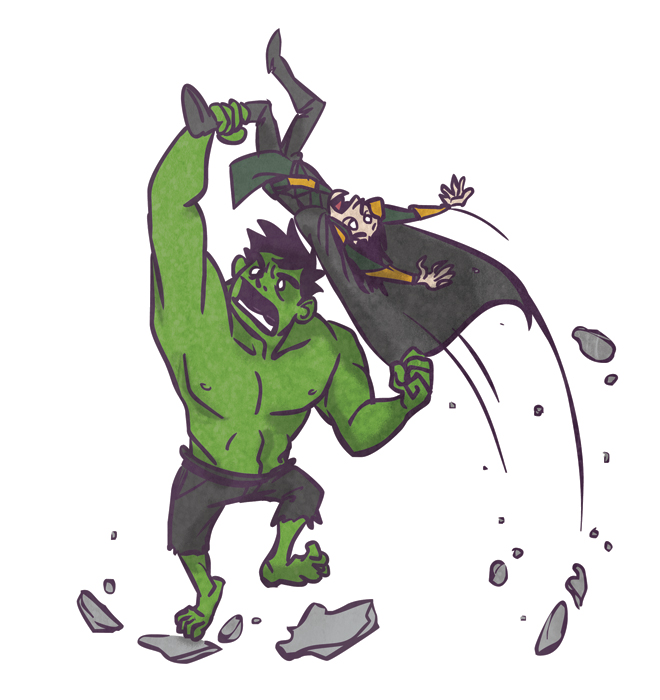 |
| Insulting a Hero is a Bad Idea |
Desperation Attack
This is a hero's last chance maneuver against a powerful enemy. When the hero is damaged (injured or staggered) he may declare a desperation attack. He makes a single melee or ranged attack. He adds +1 to the power level for every 2 injuries he is currently suffering from. He may not take extra fatigue for this attack, so if he uses extra effort he must use a hero point. This is a full round action, so if he is staggered he MUST use a hero point to accomplish this, or take 2 rounds to do it. After the attack is complete, whether it hits or misses, or whether or not it damages the enemy, the player becomes exhausted and unconscious from fatigue.
Limit Break (-2 / level power flaw)
This is very similar to a Desperation attack, except that the hero has a special power that he can unleash in very special circumstances. The hero buys a power in advance, and adds the "Limit Break" limited. (-2 per level). This power can only be activated while the hero is staggered. He must purchase the power at his full power level, but the actual power level of the power is based on the current number of injuries he currently is suffering from. (Which can be above the campaign PL). Once the limit break is used, the character collapses from fatigue (even if immune- as if extra effort). He may be awakened normally (curing the fatigue or use of heal skill, etc).
Blaze of Glory
This is it. The bad guy is too powerful, they have the characters on the ropes or dying. One character suddenly lights with new passion, his flame burns brightly just before it burns out. This is a hero going out in a Blaze of Glory.
The hero on his turn can declare that he will go out in a blaze of glory. He becomes immune completely to fatigue/exhaustion for the rest of the encounter, and thus may use extra effort as much as he wants (though no more than once per roll). That means he may take an additional action each round, or give +2 to his power level or rolls, etc. Every roll he makes for the encounter, he may re-roll as if he used a hero point. (Attack rolls, saving throws, etc). He becomes immune to the stunned condition for the rest of the encounter. (He may still be staggered).
At the end of the encounter, however, his life burns out, and he has no more strength. The hero dies, either being drained away (like Tellah from FF4) or in a grand explosion of some kind.
In order to activate a Blaze of Glory, the character must be conscious, (though wounds, fear, exhaustion etc are not a factor), and 50% or more of his team must be completely incapacitated (dead, helpless, turned to stone, etc). He may be incapacited (pinned, snared, etc) and in entering the blaze he escapes any effect which currently incapacitates him. He fights the remainder of the battle alone. Any other PC is stunned (as if fascinated by the display) until the blaze ends. (Though they may continue to make saves against existing effects or have passive effects like regeneration continue).
Now one of two things can happen- if the player defeats the enemies, he dies and cannot be resurrected by any means. If the enemies defeat him, however, he still is permanently dead, but the enemies are empowered by their victory- the other PCs lose all their available hero points, and the enemies gain them- to be used as they wish.
Obviously, this results in PC death and character turnover, but if the alternative is a TPK, this is a very lore friendly superhero way to turn the tides, while still maintaining consequence for failure.
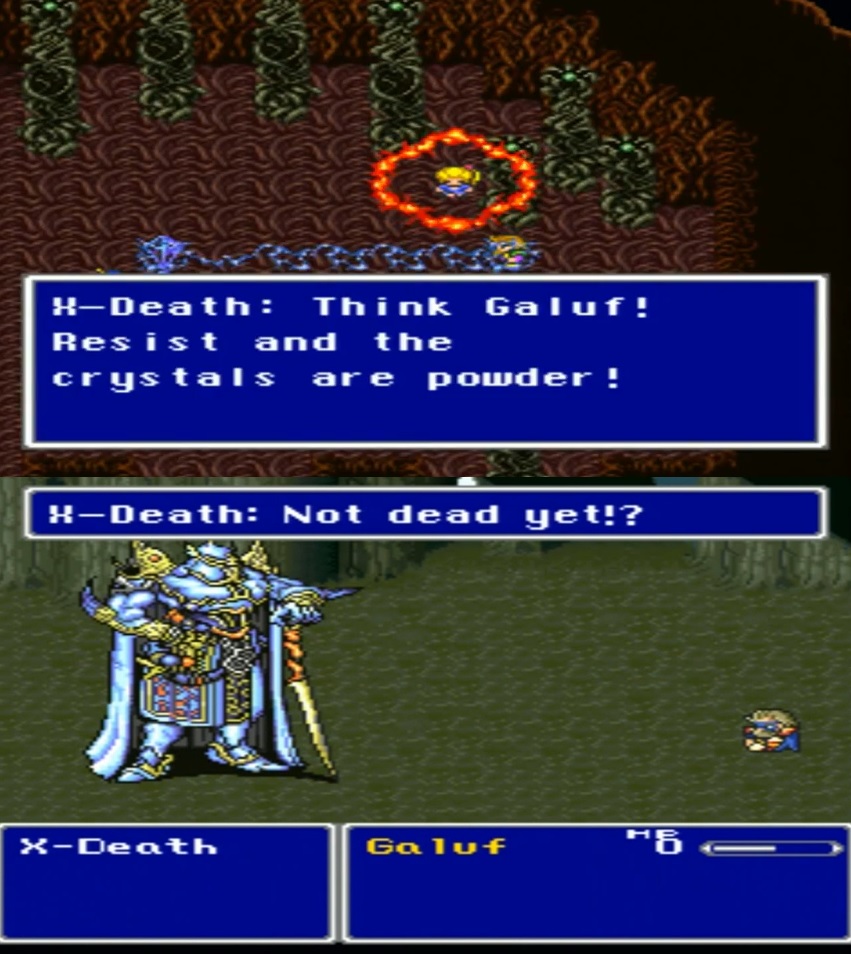 |
| Galuf goes out in a Blaze of Glory |
Monday, April 11, 2016
Campaign Styles
We all know about the Silver Age of Comics and such presented by the books, but here I thought I'd list some alternate campaign styles I've seen run using the Mutants and Masterminds "Engine".
High Fantasy: All powers are based on magic spells as a wizard, or a fighter technique, etc, and the characters are in a high fantasy world instead of a more tech one. Of course, most of the tech feats are removed or useless (unless time travel is used).
Gods: The PCs play gods and their powers are divine in nature. Of course, they must deal with other gods and the collection of followers as mission types.
Kids: The PCs are all kindergartners or teenagers at a school for super powered individuals- the stakes are usually lower (no saving the world) but the youthful age and school dynamic adds an interesting twist.
Powered World: Everyone in the world has some powers, so the heroes are not unique in that respect, and rather than superheroes or masked vigilantes, they are bounty hunters or do some kind of "for hire" work that drives their adventures.
Trekking: The PCs are all gadgeteers exploring space, where they frequently meet super powered aliens. Without special powers themselves (except what they build), and perhaps driven by some kind of prime directive.
The Dark World: The PCs all get their powers from an encroaching realm of magic, and much of the campaign involves them travelling there to defeat supernatural threats that are otherwise bleeding into the main world.
Book-Hopping: The superheroes have been cast into a sliders style campaign, except rather than alternate earths per se, they are exploring the worlds of alternate pen and paper game systems- they take a tour of shadowrun, then call of cthulhu, then go to D&D or Ravenloft, all trying to get back home.
What alternate play styles besides simply "Super Heroes" have you seen?
High Fantasy: All powers are based on magic spells as a wizard, or a fighter technique, etc, and the characters are in a high fantasy world instead of a more tech one. Of course, most of the tech feats are removed or useless (unless time travel is used).
Gods: The PCs play gods and their powers are divine in nature. Of course, they must deal with other gods and the collection of followers as mission types.
Kids: The PCs are all kindergartners or teenagers at a school for super powered individuals- the stakes are usually lower (no saving the world) but the youthful age and school dynamic adds an interesting twist.
Powered World: Everyone in the world has some powers, so the heroes are not unique in that respect, and rather than superheroes or masked vigilantes, they are bounty hunters or do some kind of "for hire" work that drives their adventures.
Trekking: The PCs are all gadgeteers exploring space, where they frequently meet super powered aliens. Without special powers themselves (except what they build), and perhaps driven by some kind of prime directive.
The Dark World: The PCs all get their powers from an encroaching realm of magic, and much of the campaign involves them travelling there to defeat supernatural threats that are otherwise bleeding into the main world.
Book-Hopping: The superheroes have been cast into a sliders style campaign, except rather than alternate earths per se, they are exploring the worlds of alternate pen and paper game systems- they take a tour of shadowrun, then call of cthulhu, then go to D&D or Ravenloft, all trying to get back home.
What alternate play styles besides simply "Super Heroes" have you seen?
Subscribe to:
Posts (Atom)