Friday, April 15, 2016

Optional Rule: Situational Special Attacks

Video Games and Movies have usually had heroes come back from great wounds during a drawn out fight to find inner strength to go on. Some of the following optional rules can be invoked by the player by some reason (such as using hero points) or they might be invoked by a villain using a villain ball (such as pushing the hero's berserk button). See below for specific actions and how to invoke them.

No Player may invoke any of these options more than once per session, and it should really happen during a climactic battle.

Berserk Button (Overdrive Mode):

This can be invoked by a player when he's interacting with a villain who has the villain ball. (See optional villain ball rules).

The player uses a hero point to invoke Berserk Button, at which point, the villain says something extremely insulting, or threatens the hero's loved ones. Now the hero is pissed off. 


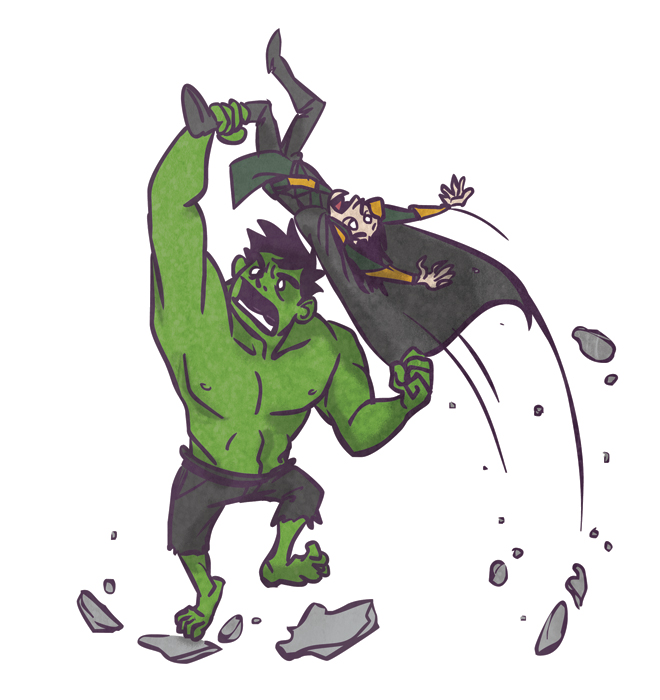
Spiderman is Pissed Off
The hero can make an immediate recovery check against all wound conditions. He also benefits from the RAGE feat (or if he has the rage feat, double benefit) which may exceed power level limits. He is however, completely berserk and must use his most powerful attacks against the villain at full power, and attempt to kill the villain. This rage lasts until the villain is defeated or escapes, at which point the hero collapses from fatigue. If there are other minions or villains involved in the combat, the hero cannot be awakened until combat is finished. If the villain hides or escapes and returns, the hero is still unconscious and cannot berserk again.

Insulting a Hero is a Bad Idea

Desperation Attack 

This is a hero's last chance maneuver against a powerful enemy. When the hero is damaged (injured or staggered) he may declare a desperation attack. He makes a single melee or ranged attack. He adds +1 to the power level for every 2 injuries he is currently suffering from. He may not take extra fatigue for this attack, so if he uses extra effort he must use a hero point. This is a full round action, so if he is staggered he MUST use a hero point to accomplish this, or take 2 rounds to do it. After the attack is complete, whether it hits or misses, or whether or not it damages the enemy, the player becomes exhausted and unconscious from fatigue.

Limit Break (-2 / level power flaw)
This is very similar to a Desperation attack, except that the hero has a special power that he can unleash in very special circumstances. The hero buys a power in advance, and adds the "Limit Break" limited. (-2 per level). This power can only be activated while the hero is staggered. He must purchase the power at his full power level, but the actual power level of the power is based on the current number of injuries he currently is suffering from. (Which can be above the campaign PL). Once the limit break is used, the character collapses from fatigue (even if immune- as if extra effort). He may be awakened normally (curing the fatigue or use of heal skill, etc).


Blaze of Glory

This is it. The bad guy is too powerful, they have the characters on the ropes or dying. One character suddenly lights with new passion, his flame burns brightly just before it burns out. This is a hero going out in a Blaze of Glory.

The hero on his turn can declare that he will go out in a blaze of glory. He becomes immune completely to fatigue/exhaustion for the rest of the encounter, and thus may use extra effort as much as he wants (though no more than once per roll). That means he may take an additional action each round, or give +2 to his power level or rolls, etc. Every roll he makes for the encounter, he may re-roll as if he used a hero point. (Attack rolls, saving throws, etc). He becomes immune to the stunned condition for the rest of the encounter. (He may still be staggered).

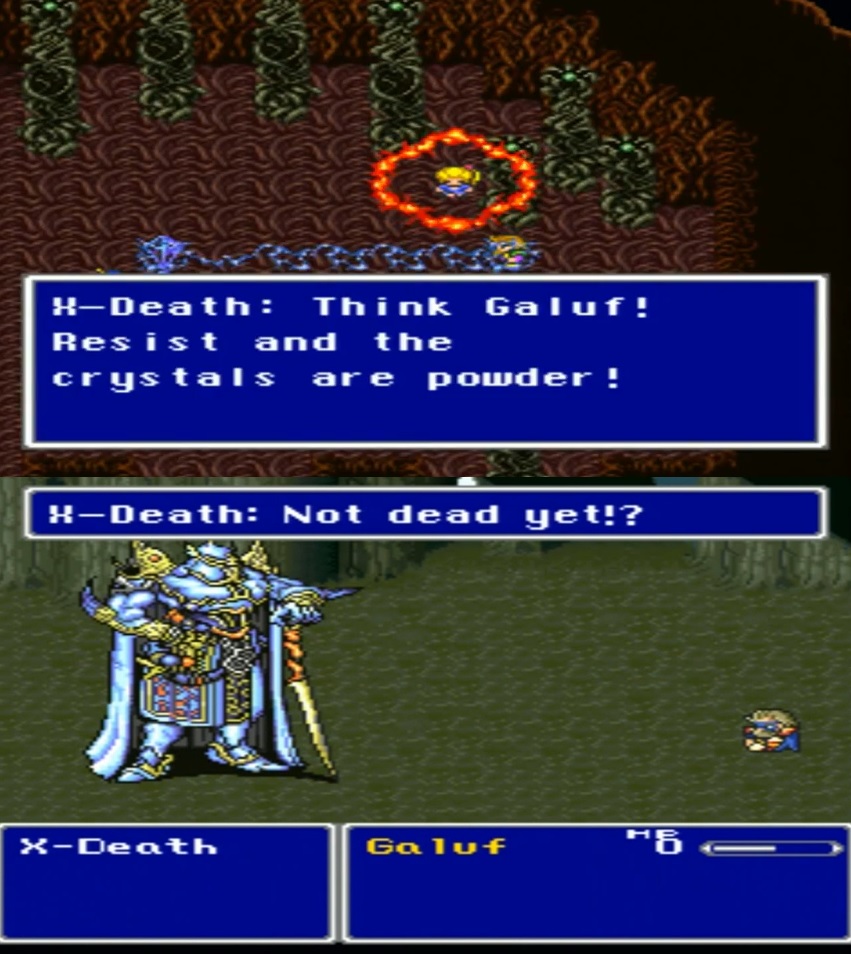
At the end of the encounter, however, his life burns out, and he has no more strength. The hero dies, either being drained away (like Tellah from FF4) or in a grand explosion of some kind.

In order to activate a Blaze of Glory, the character must be conscious, (though wounds, fear, exhaustion etc are not a factor), and 50% or more of his team must be completely incapacitated (dead, helpless, turned to stone, etc). He may be incapacited (pinned, snared, etc) and in entering the blaze he escapes any effect which currently incapacitates him. He fights the remainder of the battle alone. Any other PC is stunned (as if fascinated by the display) until the blaze ends. (Though they may continue to make saves against existing effects or have passive effects like regeneration continue).

Now one of two things can happen- if the player defeats the enemies, he dies and cannot be resurrected by any means. If the enemies defeat him, however, he still is permanently dead, but the enemies are empowered by their victory- the other PCs lose all their available hero points, and the enemies gain them- to be used as they wish.

Obviously, this results in PC death and character turnover, but if the alternative is a TPK, this is a very lore friendly superhero way to turn the tides, while still maintaining consequence for failure.

Galuf goes out in a Blaze of Glory


Monday, April 11, 2016

Campaign Styles

We all know about the Silver Age of Comics and such presented by the books, but here I thought I'd list some alternate campaign styles I've seen run using the Mutants and Masterminds "Engine".

High Fantasy: All powers are based on magic spells as a wizard, or a fighter technique, etc, and the characters are in a high fantasy world instead of a more tech one. Of course, most of the tech feats are removed or useless (unless time travel is used).

Gods: The PCs play gods and their powers are divine in nature. Of course, they must deal with other gods and the collection of followers as mission types.

Kids: The PCs are all kindergartners or teenagers at a school for super powered individuals- the stakes are usually lower (no saving the world) but the youthful age and school dynamic adds an interesting twist.

Powered World: Everyone in the world has some powers, so the heroes are not unique in that respect, and rather than superheroes or masked vigilantes, they are bounty hunters or do some kind of "for hire" work that drives their adventures.

Trekking: The PCs are all gadgeteers exploring space, where they frequently meet super powered aliens. Without special powers themselves (except what they build), and perhaps driven by some kind of prime directive.

The Dark World: The PCs all get their powers from an encroaching realm of magic, and much of the campaign involves them travelling there to defeat supernatural threats that are otherwise bleeding into the main world.

Book-Hopping: The superheroes have been cast into a sliders style campaign, except rather than alternate earths per se, they are exploring the worlds of alternate pen and paper game systems- they take a tour of shadowrun, then call of cthulhu, then go to D&D or Ravenloft, all trying to get back home.

What alternate play styles besides simply "Super Heroes" have you seen?

Thursday, March 31, 2016

Extra: Charged Power and Blood Magic

The system includes a flaw "Action" which allows the player to get a discount on his power by moving it from a stadard action to a full round action, and further to 1 full round. From there you can have the complication if the power takes even longer to cast.

This is ideal for powers like boost that you could make cheap by giving a crazy time to charge up, then be able to go use it as needed, instead of a power you need to make use of in combat.

However, I think there's room for one more kind of power- a charged power.

Extra: Charged Power (+0)
A charged power has its power level modified by how quick an action it is. Consult the chart below. Whatever power level you buy the power at is the "base" power level. This power cannot be further modified in either direction by the action edge/flaws.

Free Action (once per round): Power can activate at PL 1.
Move Action: Power Can activate at 1/4 PL (round down, min 1).
Standard Action: Power can activate at 1/2 PL (round down, min 1).
Full Round Action: Power can activate at base PL.
1 Full Round: Power can be activated at PL +1 (can break PL limits).
For each step on time/progression table, power can be activated at a further PL +1. (Maximum PL x 2 or PL 20)

During the "charge" time, the character is using all his actions to charge the power. He cannot move, and he is flat footed (but not helpless). He can be moved (such as being in a car, or carried on a horse or by others), but any vigorous movement requires a Concentration Check DC 15+PL or the charge is wasted and the power is lost.

If he is damaged, he must make a concentration check DC PL of power used + Toughness save of damage dealt or he loses the power and charge is wasted.

This can allow you to do Dragonball esque battles with long charge times and massive effects.


Notes:

  • If you buy "Full Power" complication on this, you must charge up to maximum power in order to use the power at all. 
  • Feedback is a good flaw to use, with the idea that you are damaged or stunned or otherwise hurt if you lose the power prior to the charge being completed. 
  • You may want to limit this to combat powers (blast, nullify, snare, etc) rather than allowing characters to charge a long time for high level and high duration powers like boost or transform self, etc. It gets broken if a PL 10 character can charge in his house all day to gain benefits of a PL 20 transform or boost and run around with high level powers all day. 

Extra: Blood Magic (+0)

Blood Magic is a power that drains the caster of their essence as they use it. Basically this power has the constant side effect that the user must make a toughness save against the damage TN of the power when it is used, or they are damaged. The damage given is incurable, and can only be healed through natural healing, not through the healing power or regeneration. The power must be purchased at the maximum power level. If you die from this, you completely disintegrate and cannot be resurrected (though you might be saved by time travel or something)

However, the advantage is that you may set any power level when you cast the power. Of course, higher power levels mean you will likely be irreversibly destroyed. The plus side is the ability to demolish power level limits and defeat more powerful foes.

Notes:
  • You will certainly want to limit this to PC main characters, as this gets out of hand if they are used by summons, duplicates, minions, or other highly disposable characters. 
  • This should be viewed with distrust or as if it is evil, and public display will likely create penalties for public support rolls (or just outright villainy points). 
  • This makes for a great way for a hero to self sacrifice himself to beat a powerful villain, but keep in mind that this could have a huge party turnover of people willing to throw away a character to avoid a plot. This gets very powerful very quick. You've been warned. 

Wednesday, March 30, 2016

Optional Rules: Public Support and Villany

Below are two optional rules you might want to include in your mutants campaign.


Public Support: This represents how much the average population views you as their hero, or as a troublesome vigilante. These can be separate per character, or the entire superhero team's result. You have a public support modifier, which starts at 0.

At the end of every public villain fight, roll 1d20, and apply the following modifiers:

  • Heroes defeated Villain in a public fight (+2)
  • During fight, villain was threatening civilian lives (+2)
  • Normal law enforcement was powerless to defeat villain (+2)
  • Innocent people were injured (-1) or killed (-5) or killed via friendly fire/carlessness of heroes (-10)
  • Gross Property damage was incurred (-2)
  • Heroes were supported or backed by an important public figure (chief of police, mayor, president) +2
  • Hero allowed villain to escape in order to save civilians (+2)
  • Hero captured the villain (+2), Hero killed the villain (-2), Hero killed the villain AFTER incapacitating him (-5), Villain killed by his own doing (purposefully or accidnetially) (+0)
  • If captured, villain receives a full trial and goes to lawful imprisonment (+1)
  • If a villain gets a trial, he is found not guilty (+0), or he is not able to be convicted due to an error made by the heroes (-2)
  • Hero made use of especially terrifying powers (as determined by GM, but summoning demons, transforming into a monster, etc) (-2)
  • Hero acted unethically in the combat to defeat the villain (-2) (Does not involve tricking the villain, but being generally unethical)
  • Hero's actions caused damage to property or injury to public (-5), this goes to (-2) if this happened due to mind control or if it's proven to not be the hero's fault.
  • Hero prevents villain's obvious scheme (stealing an object for example) (+1)
  • Hero is defeated by the villain (-2)
  • Villain has more public support than the heroes (subtract the difference)
  • Hero has more public support than the villain (add the difference)

So, during a battle with the evil Hansel Oliphant, master of mind control, and presidential candidate, the heroes are mind controlled and cause property damage (-2). They are able to overcome him (+2), but he escapes. However, he has a public support of 5 and the heroes have public support of 1 (-4). So the heroes roll 1d20 -2 (-2, +2, -4).

They consult the following table:
Result is less than Zero: Hero loses 1 point of public support. If they are already at zero, they gain 1 point of villainy.
Result is 0-20: No change to public support.
Result is 21+: Hero loses 1 point of villainy. If they have zero, the gain 1 point of public support.

Value of Public Support:

Public support represents how much the public values the hero's efforts. The player may roll a public support check (1d20+ support value) to get one of the following benefits:

DC 15: There is a parade or event in the hero's honor, perhaps the mayor gives him the key to the city or something.
DC 20: The hero gets a free rank of the "benefit" feat, as appropriate. Using this will reduce public support value by 2 points.
DC 20: The heroes can call for "crowd support" during a combat, where civilians will rush to the hero's aid in some fashion (determined by the GM) during a public fight. (See below for the obvious example from spiderman). Using this reduces public support by 2 points, but provides an additional +2 bonus to the public support gaining roll)


DC 30: The hero gets a museum or something similar built in his honor. Using this reduces public support by 5.
DC 30: The hero can call in a favor from an important political figure on a city level (such as a mayor or chief of police). This reduces your public support roll by 1.
DC 40: The hero can call in a favor from an important political figure on a state level, (such as the governor, or a city official from another city in the state). This reduces public support by 2.
DC 50: The hero can call in a favor from an important political figure on a national level (such as the president, or a city/state official from anywhere in the country). This reduces public support by 5.
DC 60: The hero can call in a favor from an important political figure on a global level (such as a leader of another country, or the united nations). This reduces public support by 10.
DC 70: The hero can call in a favor from an important political figure anywhere he is aware of, including another dimension, another planet, etc. This reduces public support by 20.


Villainy:

This is the opposite of public support in concept, but different in execution. This is when a player does something villainous, even for a good purpose. Perhaps he tortures a villain for information, or murders villains instead of jailing them. Perhaps he just does villainous things in general. Doing this gives out villain points. Note: The villainy does not need to be public knowledge. The hero's regularly stop villains who are being secretive about their evil plots. Likewise, the PCs secret evils might be discovered via esp, mind reading, postcognition, etc.


Villain Points:
Character Does minor villainy (such as stealing items harmlessly, making a deal with a bad guy to make a mission easier, letting a false villain take a fall, attacking police) +1 point.
Moderate Villainy (killing an enemy, torturing someone for a good purpose, gross negligence, hurts people) +2 points
Major Villainy (rape, killing innocents, rampant destruction) +4 points
Epic Villainy (genocide, disintegration of a planet, etc) +10 points.

Every session, roll 1d20 and add the villain points. (only roll if villain points > 0)

Result:
15-20:Police show up to attempt to apprehend the PC.
20-25: Another superhero attempts to apprehend the PC.
25-29: A superhero team attempts to apprehend the PC.
30+ The PC is deemed a public enemy and is wanted by governments as well as superheroes.

Alternately, the hero may lose villain points by doing especially altruistic acts, or sell them for "GM Hero Points" where the GM can have the villains use hero points at no benefit to the PCs except using up one of their villain points.

The idea here is for the PCs to act like heroes, and if they act more like antiheroes or villains instead, sooner or later someone comes after them.

What do people think? Would you use this in your campaign?

Tuesday, March 29, 2016

Alternate Dimensions

We talked about the dimension super movement, but I wanted to take a second to detail potential locales for superheroes to go into.

Space: Space is nice. It requires only 3 dimensional travel, so with a ship you can bring in any other planets you want. Of course, since space is "easy" to travel for superheroes, it's easy for aliens to come back. It's all about distance. The nice things about space is (based on speed of light) it's possible to communicate with other planets (albeit potentially slowly) so people may be able to communicate with you even if you're stranded on another planet.

Separate Dimensions: Think of D&D dimensions here, a plane of fire, the astral plane, the ethereal plane, Heaven, Hell, etc. These are dimensions that do not overlap earth in any kind of "dimensional space). This is what people typically think of when you think of alternate dimensions. Requires dimensional travel to access. Typically if you're trapped here you have little ways to communicate with home.

Alternate Dimensions: These are like Sliders alternate earths, not time travel, but the exact same place but on an alternate dimension. The Flash TV show justifies that the different dimensions vibrate at different speeds thus we simply don't see each other, which is interesting. Just like separate dimensions, except you're more likely to see very familiar items here, where separate dimensions will have drastically different areas, gravity, etc. This one is less likely for you to need some kind of environmental adaptation.

The Microverse: Accessed by shrinking to the subatomic level, you enter a microverse, which could be an entire new universe existing within a singular atom. It's not an alternate dimension, it just exists within very small space, so you can't escape it without growing in size.

The Macroverse: The opposite of the microverse, this is done by growing so large that our entire universe fills the space of a single molecule or atom to you. The danger here is that returning to your own universe is VERY difficult, as you have to find the exact atom you used to stand in before shrinking back down (also you will probably do some damage while growing). Special teleportation might be able to help you get home, but it's not an alternate dimension it's space.

Alternate Universe: This is based on you leaving your universe, and entering another one. For all intents and purposes, this involves 3 dimensional space, but you might not be able to access it properly from your own universe. Imagine that your universe is a donut- no matter what direction you go, you loop around somewhere, but there may be other donuts that you can jump onto. (Perhaps by traversing the macroverse). Alternate dimension won't help you, though you may be able to teleport between them, or use the macroverse to travel.

Alternate Timeline: An alternate timeline is your own dimension, but affected as if the past was different. This is similar to Alternate Dimension, except that you can't teleport off it, the only way back to your own timeline is to go back in time, repair the issue, and then go back to the future. (Pretty tricky to accomplish). Time travel stories frequently use this.

Alternate Time: This is your own timeline, but somewhere in the past or future. It could be millions of years, making the world very different (regardless of direction) but you might be able to utilize postcognition or precognition to communicate with your home time, or if you're in the past, you might be able to use fossils or stalactite formations to communicate with the deep future. Temporal movement is the way to get here or home from here.

Did I miss anything? Let me know what dimensions you've played with in your campaigns.

Friday, March 25, 2016

Non-Standard Attacks

You attack. He rolls toughness. He attacks, you roll toughness. 

Get's a little tedious? Not just tedium, think about how easy you leave it to make a character who can't be hurt when toughness is the prime save. Below is a look at different attack "styles" and the pros and cons of each...

Standard Damage:
This can be energy, physical, strike, blast, but any attack that does damage with a toughness save.
Notable attacks include:

Melee: Easiest to break damage limits by wielding weapons, abusing the AIM manuver, and tradeoffs.

Ranged: Attack from a distance, but enemies in melee, lying down, with cover, etc get some AC bonuses against you.

Perception: Always hits, but not variance to damage. An equal villain should save about 50% of the time.

Corrosion/Disintegrate: Notable in that it lowers the save FIRST (if you fail FORT) then you make the save. (See Debuffs below).

Pro: Can be easy to break TN limits, and since toughness is limited lower than other saves, probably the simplest way to attack.
Con: Because it's everyone's "Go to", many people use immunities or protections to get around it- such as impervious. Also healing and regeneration make even the failed saves of little effect, and those are very commonly taken powers.

Debuffs:
This is mainly drain or some aspect of it, but could include nullify, or power use to turn off powers. These attacks generally help other attacks succeed, by lowering your stats or reducing your powers.

Pro: Targets a different save (usually fort) which would have needed to be bought up separately. Useful against "dodgy" characters with low fort by removing their other suppliment powers.
Con: Toughness and fort are both CON based and usually if one is high, both are high. Nullify grants "best of" opposed PL and saving throw to defender. Hard to justify the missed action in most cases, unless linked to a damaging power directly (like corrosion).

Debilitators:
These attacks don't kill or deal "damage" but they render a status effect onto the enemy, which some situational penalties that go with it. Notable examples:

Fatigue: Many characters take immunity to fatigue, so this power doesn't have all the best use. The best use of this power is when you use the restorative extra so you can heal your fatigue as you grant it to others, allowing you to use more extra effort, drawing your energy "harmlessly" from weak citizens or something nearby. (You aren't actually hurting them, after all). I do see many PCs taking immunity to fatigue.

Stun: Notable in that no one can be immune to stun (since it's a damage condition), and it lasts multiple rounds potentially (unlike the damage condition).

Snare: Relatively harmless and can render enemies helpless.This includes creating objects around enemies. Nice in that helpless enemies remain conscious (unlike fatigue and stun) so you can interrogate them or talk to them still. The down side is that many powers are not prevented, such as mental powers and teleports, and that the snare can often be escaped by either strength checks, escape artist rolls, or damage. Also, between snares and grapples I see lots of PCs take immunity to entrapment effects.

Combat Maneuvers: Trip, Bull Rush, Disarm, Grapple: These are easy to max the roll on and make it difficult to escape, but so few powers rely on anything that these maneuvers effect, and movement powers make it difficult to keep anyone trapped.

Shrinking: With enough size, you can shrink someone into the microcosm, and effectively remove him from the combat (or the world!) until he turns back (if he does).

Pro: The system includes nonlethal "damage" but some damage types (chainsaws) don't make sense non-lethally, and this is a good way to take people out without killing them. Also with the "alternate save" extra you can potentially attack whatever save is the weakest.
Con: When saving throws are maxed they are higher than Toughness and more likely to succeed. PCs tend to use hero points on saving throws more often than anything else. Compared to "save or die" powers (below) these use the same saving throw, but have lowered effects, or tiered effects.

Save or Die:
These effects include anything where the save must win or the target is completely helpless to your character- effectively they have one chance or it's all over. Unlike debilitating effects (above), or toughness saves for damage, the amount by which they fail the save is irrelevant, they either pass or fail, so these tend to be the favored attacks. Notable examples:

Transform: Turning people to frogs, statues, very small rocks, etc. Anyone with shape changing powers can just turn back, but for most people this is effective. Mental transform can remove someone's ability to use their powers and turn them completely into a willing ally immediately. I've also heard "transform you into dead you" as a variant of transform.

Mind Control: A favorite power amongst PCs. Failure and the enemy is yours, and with certain options can be better than mind reading as you can have the enemy tell you anything you want to know. With mind control, each save gives you +1 to successive saving throws, so you can't  just spam it at them until they fail. Mental effects is one of the favorite immunities. Alternately using a fort save instead and calling it "body control" to get around the mental immunity, though then you don't control their powers and can't force them to give you information.

Pro: These instantly eliminate the enemy, and also non-lethally also. Some may be very troublesome as you can make a powerful enemy into an ally with some mind alterations.
Con: Whatever extras you put on these, nothing is ever permanent- they can be dispelled later. Also mental effect immunity is cheap and very commonly taken by PCs. They usually include regular saving throws to throw off the effects also, unless you throw extra points into making it continuous.

Non-Standard:
The reason for this entry completely, a list of some attacks that are uncommon, and thus unlikely for an enemy or PC to simply be immune to.

Teleport: Used as an attack, this can remove someone from the battlefield. Leaving them in a jail, underground, wherever can ensure that even with flight or super speed they don't just come back. Sending them into a dangerous environment like space, volcanoes, the sun, or underwater is a big one too. Teleporting characters can just return themselves, but many other characters may be unharmed, but are pretty much out of the fight. Teleports can't save others unless they have some way of knowing where they were sent.

Anatomic Separation: Forcing the limbs off a character (using the attack extra). He can put them back together if he can bring his limbs back together, but in the meantime you may have limited some of his powers or attacks, and regeneration/healing will not regrow the limbs if they are still active. Some powers might not be bothered by having limbs removed, but many do.

Dimensional Pocket: Like teleport, but you force the enemy into a bag, portrait, or whatever. The nice thing is that because it's interdimensional, you can't just teleport back if you're a teleporter, and the enemy has you "where he wants you" and can take you around wherever.

Insubstantial/Astral Projection: Particularly insubstantial 4, but also astral projection or similar powers to force them into a form that can't attack you except with mental effects. You can't contain him necessarily (without other powers) but you can prevent his ability to affect you.

Duplication: With the attack extra, you basically copy the enemy and have him attack the original, such as with a mirror of opposition. What's more, the duplicate knows everything he knows. Keep in mind, you don't by default control the duplicate, though with the right terms you can at least make sure it hates him.

Temporal/Dimensional Movement (with attack): Whether you're going with him and grappling him to count towards your weight limit, or using an attack power, you can strand someone in the deep future or an alternate dimension. Just realize if it's an attack, the save DC will be very low, as this caps out at rank 3.

Power Use/Boost: This one could warrant its own entry, but between Boost, Affects others Powers, and power use, you can force the enemy to use powers that are harmful to himself. Examples include-

  • Giving the enemy empathic healing and forcing him to use it on the party with power use. 
  • Giving the enemy a feedback  or side/effect power and forcing him to use it, taking the feedback or side effect. 
  • Giving him an aura of emotion control; rage to get everyone to attack him, even his minions.

Not only can these create more dynamic and interesting battles, but overcome a lot of those common immunities and defenses as well. Please reply in the comments if you have any additional ideas besides what was mentioned above. 

Thursday, March 24, 2016

Temporal Movement and Dimensional Movement

Super Movement has 2 types of movements that specifically say the GM should highly regulate or ban use of altogether. Temporal Movement and Dimensional Movement. Earlier I spoke about how to make a "Time Traveler" without the Temporal Movement ability per say. But is it possible to have a campaign that allows these movements (which most GMs just ban outright?)

Temporal Movement:
1 rank (2 points): Travel between the present and one fixed point in time (such as 100 years in the past or 1000 years in the future).
2 ranks (4 points): Move to any point in either the past OR the future (and presumably back to the present again).
3 ranks (6 points): To any point in time.

Dimensional Movement:
1 rank (2 points): Between the home dimension and one other dimension.
2 ranks (4 points): Between any of a related group of dimensions (mystical, alien dimensions, etc)
3 ranks (6 points): Any dimension.

By comparison, 2 ranks (4 points) of wall crawling allows you to move at your full movement speed when climbing with no climb check, or to ignore hampered movement, or walk at full speed horizontally on air.

Both of these powers work like teleporting to some degree also, but let's first clarify some of the inherent weaknesses in both. First being that they are NOT teleport.

Travelling between dimensions gets tricky, because the dimensions do not necessarily overlap each other in physical space, but the GM has four options here:
  1. Travelling to dimension B takes you to the same point on dimension B each time regardless of where you were when you left dimension B or where on earth you left from.
  2. When you leave dimension B your location is set. So if you are in jail on dimension B when you leave, you return to jail on dimension B when you return, regardless of what happens on earth (and vice versa).
  3. Your destination on dimension B is linked to your physical location on earth. (Think Zelda: Link to the past and the dark world- you're location is based 100% on where you were in Hyrule when you cross over, and vice versa).
  4. You can go wherever, and this power becomes way cheaper than Teleport, and I highly discourage this option.
Both time travel and dimension travel lose some of the potential benefits of teleportation: you can't change your facing, your inertia (if you're falling) or anything else you would be able to do with teleport feats.

As time travel and dimension travel are instantaneous, without precognition or some kind of dimensional/temporal ESP, you could very easily end up travelling into solid matter. With dimensional movement you also have no guarantee of a hospitable environment you travel into.

That's just the tip of the iceberg. Let's examine the two real problems with these powers. How can they be abused to be UNBALANCED, and how can they be just TROUBLESOME.

  • Unbalanced: Characters can travel to other dimensions or time periods to charge a weapon, heal up, repair things, or accomplish tasks, then return instantly to mid-fight, or potentially shoot across dimensions at foes here.
  • Troublesome: The GM is forced to create other dimensions for the characters to go into, or deal with other eras of history that he may not have been prepared to run.
  • Troublesome: The character can go back in time within his own timeline in an attempt to change things that are already campaign history, including main plot points.
  • Troublesome: If the other PCs aren't brought along, one PC monopolizes the GM's time with their travel.
  • Unbalanced: A PC who travels into other dimensions or the future may be expecting to return with alien/magic/future technology (though as GM you should just force him to spend power points on whatever he gets).
  • Troublesome: The PC who interacts with other versions of himself or the party may require the GM to take over a past character, or allow the character to "role play with himself".
  • Troublesome: PCs who want to dimension travel to alternate earths (like sliders) who want to use this to circumvent plots (like going to an alternate earth where this isn't happening).
While the powers seem broken, overall they are more troublesome than they are unbalanced. Both these powers can be abused during battle (and moreso if converted to attack powers). Here are some potential workarounds to the troublesome aspects.

  • Establishing your dimensions ahead of time takes more work but limits where the PCs go. Perhaps they need to be aware of a dimension before they go to it with the power.
  • You might limit PCs not to be able to time travel into a time period that they occupy. This could prevent them trying to use time travel as an "undo"button and prevent time travel into the immediate future or past. This can get further complicated if you need to track times that contain a time travelling PC and times that do not, and will prevent many time travelling complications (both troubling for the GM and plot related)
  • A PC who time travels can find himself particularly at risk underground or in cities. How long as this cave been here, and when will it collapse? Don't guess wrong! Also jumping a few rounds into the futures gives enemies an opportunity to put a big stone block or other obstacle in your square for you to materialize into and get trapped in. (Maybe you can time travel back out, but it gets complicated for you to find an appropriate escape time that leaves you able to participate in the battle. 
  • Timecop brought in the "don't touch yourself" rule that is carried in Shadows of Memories and in Project Almanac it gets even more severe with inability to interact with yourself at all without creating a self-destructive paradox. 
  • Use alternate dimensions style of time travel discourages time travel to the past, as the future doesn't change "around" the other PCs- you just travel into another version of history, thus taking your character out of the campaign.
  • D&D had introduced the concept of "Inevitables"- beings whose job it is to enforce certain laws, such as trying to keep the dimensions separated, or maintaining the proper timeline. A lot of abuse could draw attention from creatures like this, or in organizations like in Legends of Tomorrow or Star Trek Voyager who are tasked with dealing with troublesome time travelers and maintaining the timeline. 
  • Flashpoint introduces the concept of "Time Boom" like a sonic boom caused by time travel, where the butterfly effect can have such intense effects that it would discourage messing with history less you screw things up for the worse. 
  • If alternate dimensions are being abused in combat as escape routes, you could have complications arise in the alternate dimensions that a character needs to deal with alone (since he left his party behind). Likewise if he continues to hide in the past or future to heal up (or level up!).
  • If a character doesn't have age immunity, you may want to punish him with rapid aging for all the time he spends in alternate time periods. Time could flow differently in different dimensions causing the PC to be ejected far in the future (or past) or something when he returns to his own dimension also. If each round in the alternate dimension is a day on earth, he can't stay long. Careful with this though, as the reverse is true, and if they find a dimension in which time does not flow, they could easily go there, do a bunch of healing/buffing/summoning etc, then return mid battle do wreak havoc. 
  • Any power the PCs abuse is eligible to be abused by Villains, so it's not crazy to have villains do the same thing (or chase them into alternate dimensions) or be able to shoot across dimensions at them, or time travel themselves to mess with the party.

Remember, the powers should be USEFUL (they're spending points on them) and they can make for great adventure hooks, but they shouldn't be ABUSED. So going back in time to plant a tree for them to climb over a wall is one thing. Going back in time a day to amass an army who will show up right now is another thing altogether. Only nerf powers being abused, if the PC is using it in a plot friendly and less troublesome manner, this can be a good way of introducing plot to the characters.